
Molten canals
Iron leaves a furnace liquid and has to reach a mould before it sets. For most of the period that journey was a gutter in the floor, and most of what can go wrong with hot metal goes wrong in that gutter. How to lay and run a canal in the game is in the molten metal guide, and its pieces are in the catalogue. This page is about the real runners and how the game's follow them.
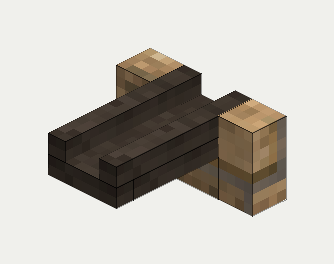
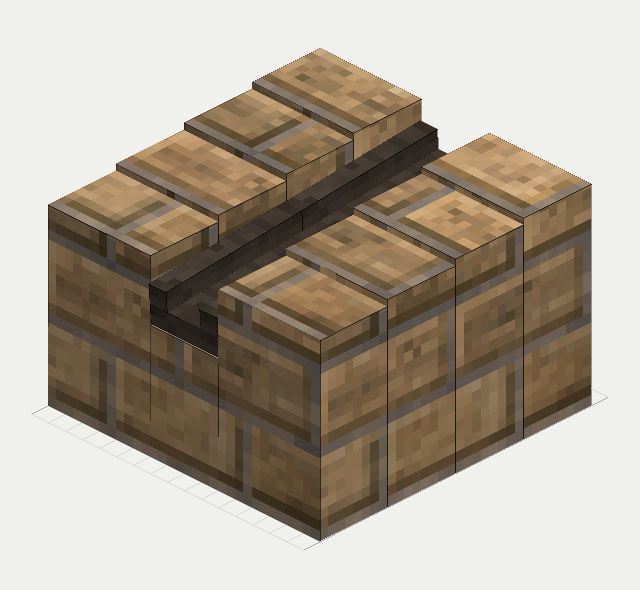
How the iron was led from the furnace
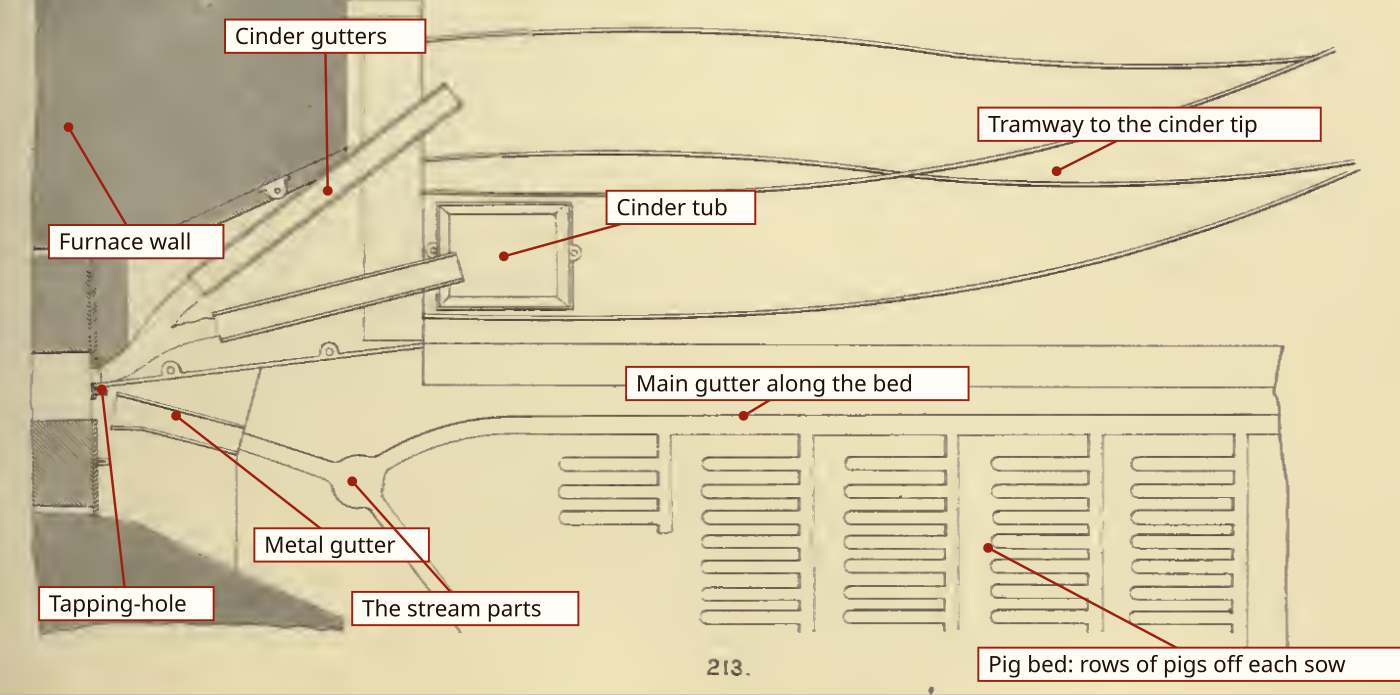
The first method was no method. In the early days the iron was probably left to "run out in puddles in front of the furnace", and there cool (Johnson Construction p. 328). A crude runner came soon after, with short laterals opening off one side to mould the iron into shapes that could be handled. To someone looking at it the arrangement was "a sow with a litter of suckling pigs", which is where the name of pig iron comes from (Johnson Construction p. 328).
By the middle of the century the iron went to a bed through something like Truran's cast-iron trough (Truran p. 29), and the bed itself was sand. Sand "does not wash in a liquid with a high surface tension like a molten metal" and is open enough to let the gases out (Johnson Construction p. 328). It has to be coarse and open-grained, with hardly any clay, or the gases cannot get away and the iron boils in its channel (Johnson Construction p. 329).
The section nearest the furnace is where a wet spot does its worst. A wet place under iron explodes. In sand the iron then bores down into the wet below and goes on throwing itself out, and a bad boil at the tap-hole could shut the furnace down; in iron the explosion is one shot and the iron cannot dig (Johnson Construction p. 344). So the first few feet were an iron trough, thoroughly grouted and carefully dried, the grout keeping the iron from burning on to it (Johnson Construction p. 344).
Later in the century iron runners replaced sand all over the cast house at American works that ran the iron straight to ladles instead of casting it in sand beds (Johnson Construction p. 346).
Cutting the stream
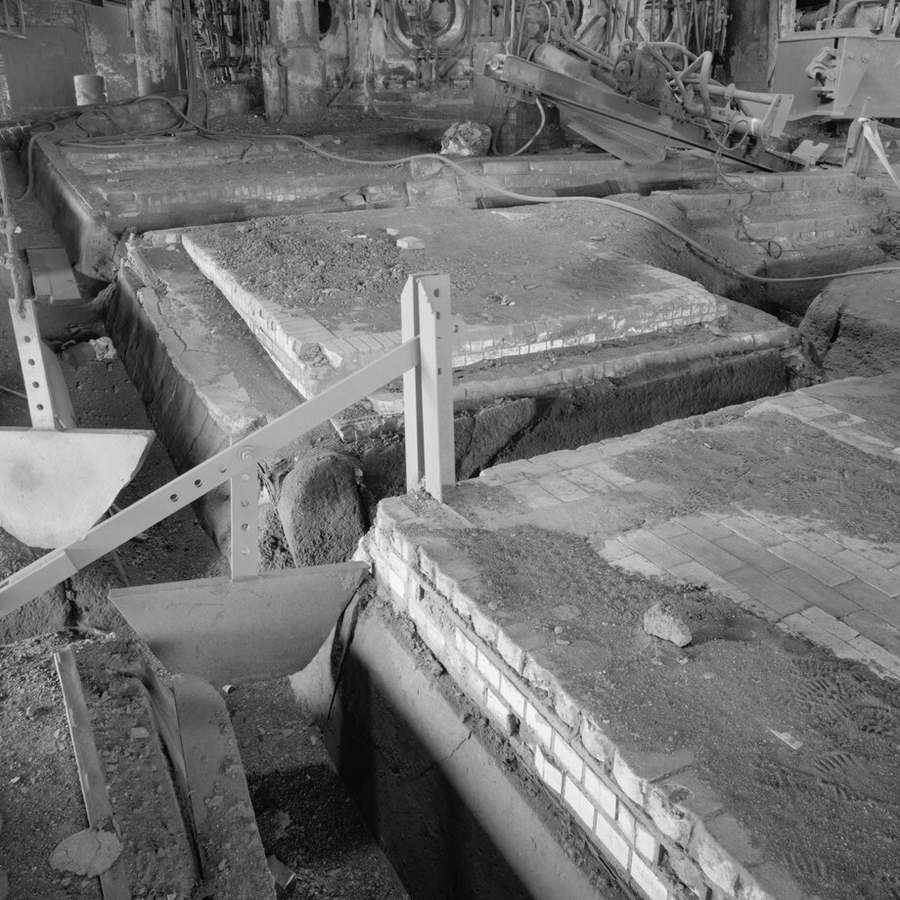
Metal in a runner has to be stopped and turned. Sand runners were dammed with sand and skimmed by hand: a thick iron plate stood in the runner between pairs of pins and was driven down with a hammer until its edge held back the cinder floating on the iron (Johnson Construction p. 345). The same plate could not be pulled up safely once it was set in sand, because drawing anything out of sand under iron was "extremely likely to cause a boil" (Johnson Construction p. 346).
Iron runners changed that. They were provided with grooves to take a gate, the gate could be raised again, and iron could be let back down a length of trough it had been cut off from (Johnson Construction p. 346). With good practice a very light skull was left in the runner when the cast was over, and a new coat of sand and grout made it ready again (Johnson Construction p. 346).
Why it freezes
Liquid iron in a channel loses heat to the floor and to the air, and when a thin stream runs slowly it sets. The practical writers all fight this the same way. A foundry mould is filled hot and fast, because metal crossing a plate gives up its heat to the mould on the way (Bolland pp. 79-80), and metal that arrives dull in thin parts leaves the joint unmade and the casting lost (Bolland p. 235). A cupola bottom that melts slowly gets a little more slope so the iron gathers before it chills on the bottom (Kirk p. 67).
The spout of a cupola is the plainest case of the same logic. It is cast iron, 7 to 10 inches wide, up to 10 feet long, lined with a refractory, and it is laid with a fall of about 1 inch to the lineal foot (Kirk p. 67). The fall carries the metal on and leaves nothing standing to chill. A wet spout, floor or mould, on the other hand, explodes the iron (Kirk pp. 257-262).
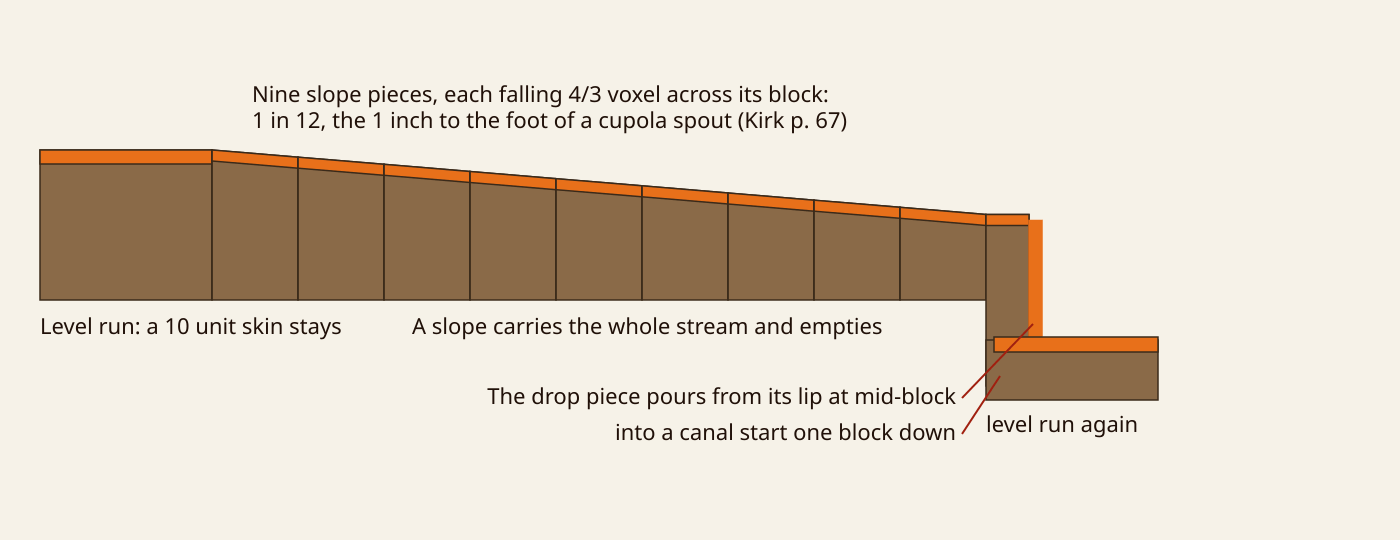
How the game models a run
A canal cell is a brick trough that holds up to 50 units and passes up to 50 units a second across each joint, planned to rise to 100. Metal moves one cell a second, so a long run takes visible time to deliver. Each cell cools by itself at the base game's rule for a hot stack. A new pour mixes its heat with what is already standing there, and neighbouring cells exchange no heat otherwise. A cell that drops below its metal's melting point sets where it stands, glows, and cuts the run at that block. It is chipped out with a chisel and hammer once it has cooled, and a planned crowbar breaks out a set run at once.
A plate, driven into a joint with a hammer and drawn out with tongs, is the game's gate. It takes its hammer from Johnson's skimmer and its reuse from his later iron gate; the tongs are the game's own. Metal behind it backs up and the furnace stalls; metal ahead of it runs on and then sets where it stands.
A floor spill follows the older rule of the iron that "ran out in puddles" (Johnson Construction p. 328), with one change. A liquid mould moved off the hand or a full run broken open pours its metal out; on a cast-iron floor it lands as a puddle that can be chipped up for most of what it held, and on any other block it is lost.
Period basis, and what is the game's own
- Period: tapped iron ran along a cast-iron trough and then a sand runner to its beds (Truran p. 29, Johnson Construction p. 328), with a fall of about 1 inch to the foot on a cupola's spout (Kirk p. 67). The game keeps the run, the fall and the failure when a stream goes cold, in brick.
- Period: a plate driven into the runner with a hammer (Johnson Construction p. 345), and later a gate lifted from its groove (Johnson Construction p. 346). The game's canal plate takes the first of these for its verb and the second for its reuse: a plate in the game can always be drawn again.
- Period: slag was led off by its own gutter (Truran Plate 36, Fig. 213). The game carries slag and iron through taps of their own, and has no skimmer in the runner.
- The game's own: canals are brick. Sand runners, the grouting and drying of the iron trough, and the wet-spot explosion are not modelled; a fired brick trough is treated as the iron runner's case, where drawing a gate is safe (Johnson Construction p. 346).
- The game's own: a level run moves metal without any fall. In the real thing a fall did that work. The level canal is a game shape, and only a run that has to change height needs the slope.
- The game's own: metal is never carried by hand as an item, except in a filled mould. Base-game crucible casting pours directly from a hand-held vessel. See vanilla against reality.
- The game's own: a floor spill onto cast-iron plates is the game's rule, and the books give none. The cast-house floor was sand (Johnson Construction p. 345).
- The game's own: nothing heats a run before a cast and no runner is dried or grouted. Hot-metal charging straight to a converter is planned for siex, and is a layout choice that needs no separate machine; the cooling in the run is what makes distance matter.
The numbers
Game figures for flow and cooling are the game's own and owe nothing to the books. How a period figure is carried over is in the scaling page, and a block's true size in scale and units.
| In the game | Period figure | How it was scaled | Game value |
|---|---|---|---|
| Slope fall | About 1 inch to the lineal foot, cupola spouts (Kirk p. 67) | The ratio kept, one in twelve | 4/3 voxel a block, 1 in 12 |
| Cooling | None given | The game's own, the base game's cooling law at a canal's rate | 24 x (temperature / 200) C a game hour above 200 C, so 168 C a game hour at 1400 C |
| Iron freezing | None given | Pig iron's melting point | 1150 C; from 1420 C a standing cell sets in about 1.8 game hours |
| Trough length | About 6 ft from tap to bed (Truran p. 29) | Not scaled; a run is as long as it is laid | Any length; each cell delays delivery by one second |
| Metal in a cell | None given | The game's own | 50 units |
| Flow at a joint | None given | The game's own | 50 units a second; planned 100 |
| Skin left in a level cell | "Only a very light skull" in an iron runner (Johnson Construction p. 346) | The game's own, in units | 10 units a cell; a slope leaves none |
| Tap and pedestal drain | None given | The game's own | 20 units a second |
| Slope's drop to the next run | None given | The game's own | 20 units a second; planned 100 |
| Puddle | "Run out in puddles" (Johnson Construction p. 328), no figure | The game's own | 100 units a cell, up to 16 cells, 75% returned when chipped up |
Open, and what you can tell us
The books at hand give a fall for a cupola spout and none for a blast-furnace runner. They give no length past which a runner chilled and no temperature for the iron along it, and they do not say how the older sand runners were stopped or turned; the earliest gate in a runner found here is of the 1890s. If you know a source for an earlier gate, or a figure for how far iron ran before it set, it would be worth reading.
Picture credits
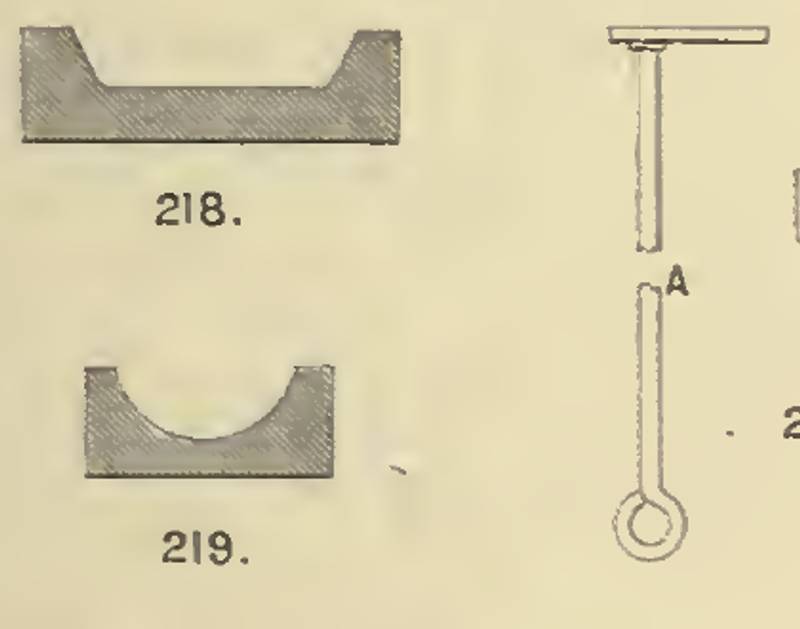
- Figs. 213, 218 and 219: Truran, The Iron Manufacture of Great Britain, Plate 36, Library page. Fig. 213 labelled for this page.
- Gate and iron runners, Carrie Furnace cast house No. 6: Martin Stupich, Historic American Engineering Record, public domain, cropped.
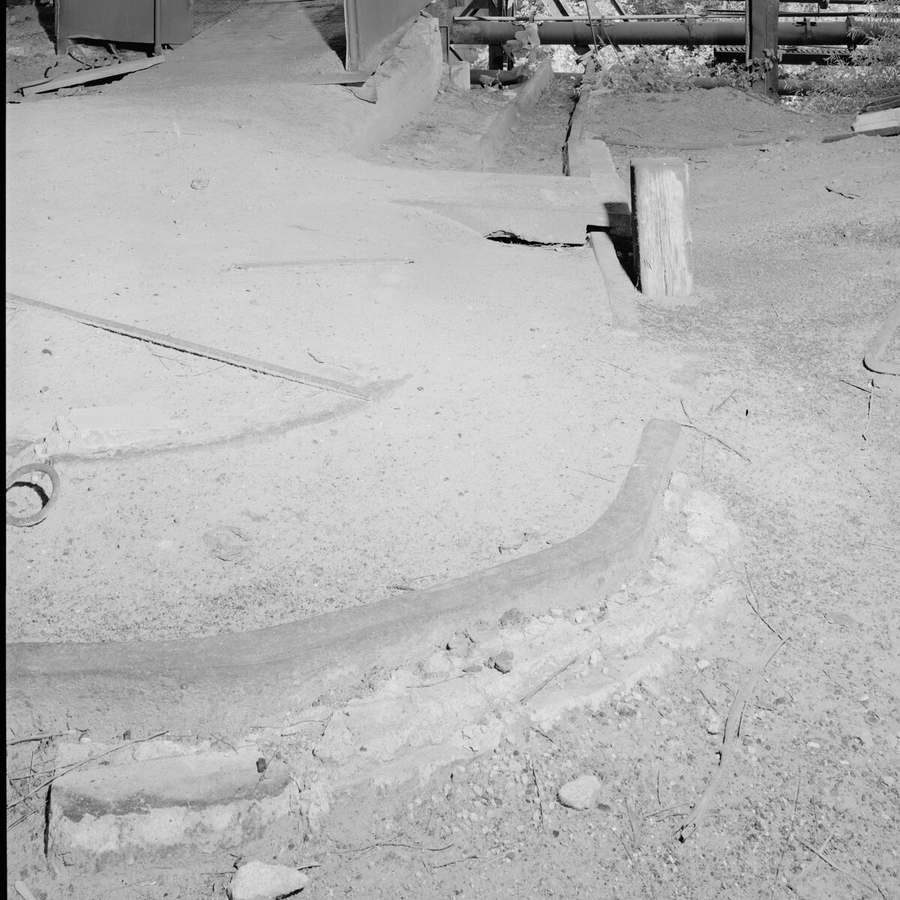
- No. 2 Furnace iron runner leading to the ladle car drop off, Sloss: Jack E. Boucher, Historic American Engineering Record, public domain, cropped.
- The slope runner: drawn for this page from the game's slope and Kirk p. 67.
- The game's tap and slope: the mod's drawings.
Comment or suggest something in the Expanded thread on the Vintage Story Discord