
Fuels
A furnace's fuel does two jobs at once. It has to give heat, and it has to stand in the fire in a shape that lets air through. The fuels of the period differ in what they carry with them and how they stand up. How to make and charge them in the game is in the coke and fuel guide. This page is about what each one is and why it goes where it goes.
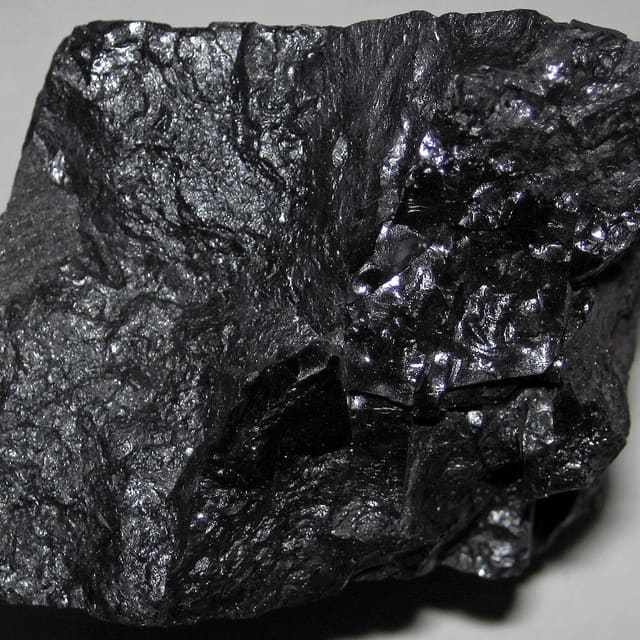
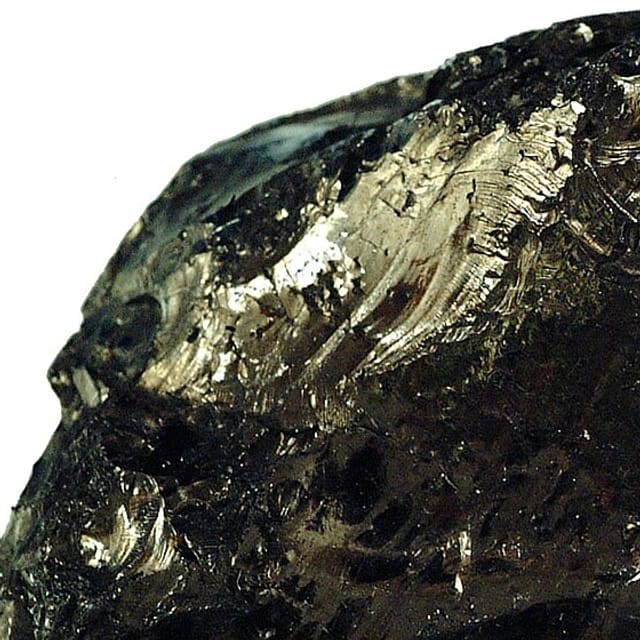
Four fuels, and what each is good for
Wood and coal both hold water, hydrogen and oxygen as well as carbon, and those harm the iron, most of all in the blast furnace. Charring gets rid of them (Overman p. 103). Coke is to coal what charcoal is to wood.
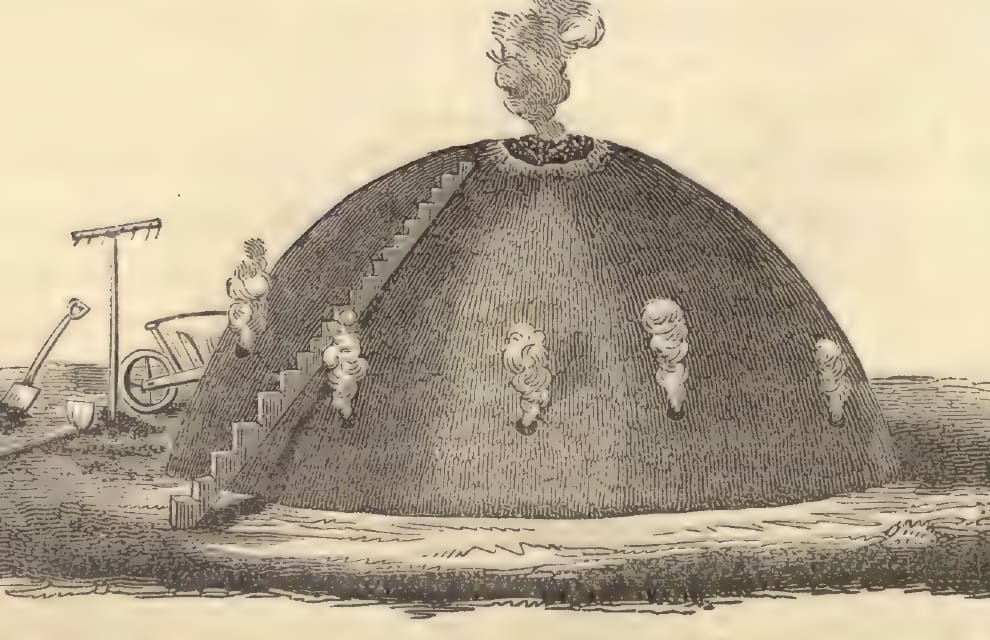
Charcoal is close to pure, and Johnson calls it "almost an ideal furnace fuel": a few hundredths of 1% of sulphur against about 1% in coke, and about 1% of ash against about 10% (Johnson, Principles p. 183). Its ash is largely lime and alkalis, so it helps flux the ore instead of adding silica to be fluxed. It is so porous that it burns fast for its hearth. It costs less fuel a ton of iron than coke does, in spite of holding only about 69% fixed carbon (Johnson, Principles p. 183). Its faults are that it comes from forests, and that it is weak: it "could only be used in the old-time forges and low furnaces with feeble blast" (Fulton p. 328). Charcoal furnaces were always small, and Johnson doubts it could have stood the conditions of a large one (Johnson, Principles p. 183).
Anthracite was the principal American blast furnace fuel until about 1860 (Johnson, Principles p. 184), and it is simple: hard enough not to fall into slack, and low in hydrogen. Overman in 1851 called good anthracite "undoubtedly the most perfect of all fuels for the manufacture of iron" (Overman p. 99). Johnson in 1918 lists what went wrong (Johnson, Principles pp. 184-185). With no cells it shows little surface and burns slowly, so the furnace's output is small; it spalls in the heat and chokes the gas passages; its density leaves the charge heavy. It also needed less than 5% of ash to be of any use in a blast furnace (Overman p. 99).
Raw coal is what remains cheap and plentiful, and the blast furnace is the one place it fails: it is not porous, it burns slowly, and its tar blocks the gas (Johnson, Principles pp. 185-186). Dry coals with little tar were used raw (Johnson, Principles p. 185), and the rest went where the fuel never touches the metal. That is the point of the reverberatory furnace.
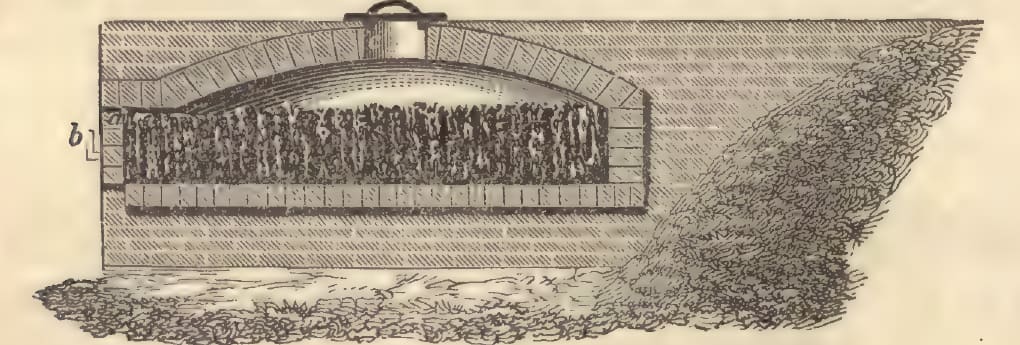
Coke gave the furnace what none of the others did: strength with cells. Coal is baked until the gas has gone and a hard sponge of carbon is left. A furnace coke wants hardness of body, full cell structure, purity, uniform quality and coherence in handling (Fulton p. 330), and good coke was not crushed by the charge above it (Johnson, Principles p. 170). Fulton names anthracite and coke together as the fuels that bear the highest furnace (Fulton p. 328); with anthracite held back by its slow burning, coke won the tall furnaces.
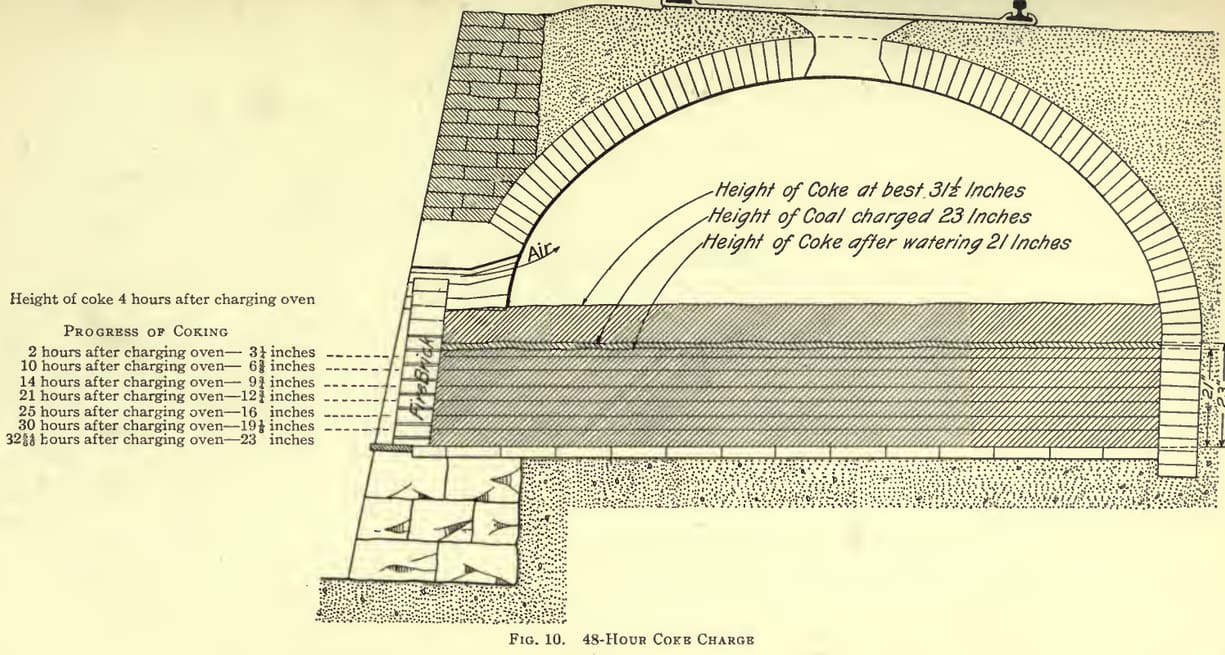
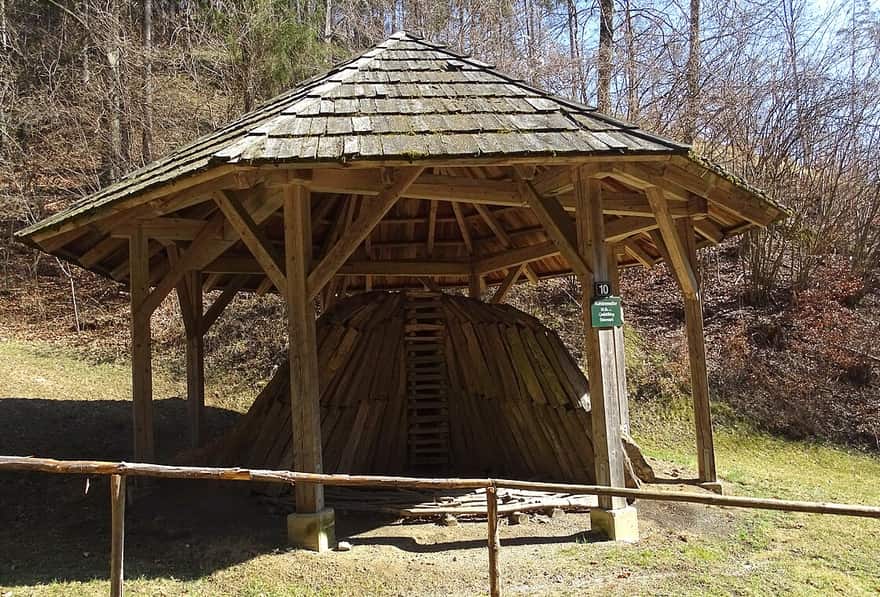
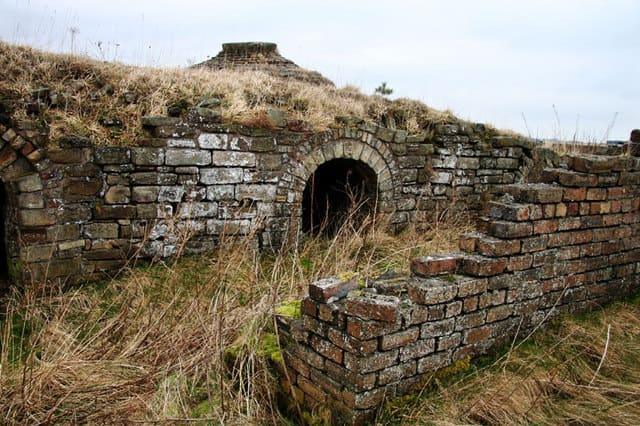
A beehive oven gives up some of the coal to heat the rest. Its yield is 63 to 66% (Fulton p. 348), against about 79% in a closed crucible (Fulton p. 163). The oven is covered more fully on the beehive coke oven.
What a fuel bed does to a fire
Fuel in a furnace is not a heap of energy. It is a porous layer through which air has to find its way, and everything a fireman did was aimed at keeping that layer even.
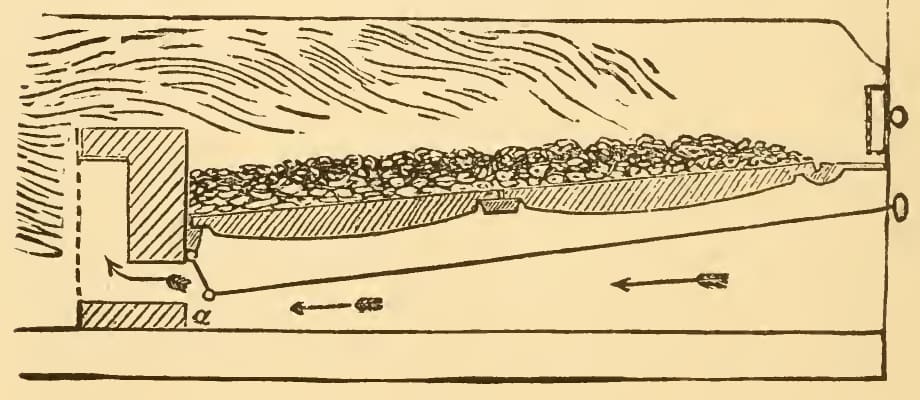
A boiler fire was kept 3 to 5 inches deep (Hawkins p. 27). Coke asks for more than coal does. A pound of coal takes 9 to 10 lb of air and a pound of coke 12 to 13, so the draught must be stronger, and the bed is burned more slowly: 9 1/2 lb of coke an hour to a square foot of grate, where 14 1/2 lb of coal could be burned (Hawkins pp. 28-29). Having little hydrogen, coke has no quick flame and the fire is more even (Hawkins p. 29). Its advantage over raw coal is that otherwise useless slack can be mixed into it when it is made (Hawkins p. 29).
A shaft furnace is the same idea stood on end. The fuel and ore go in separate layers, a coke layer about 2 feet thick in a furnace of 22 by 90 feet (Johnson, Principles p. 287), and the blast passes only through the gaps between the lumps, about a quarter of the hearth area (Johnson, Principles p. 118). A fuel that crumbles or swells closes those gaps, which is why a shaft furnace asks for strength and cells before it asks for heat.
The game keeps the two beds apart: a shaft holds its fuel in courses under the charge, and a reverberatory or boiler holds it on bars. Each firebox shows its fuel in up to six courses, and that is how much is left.
Period basis, and what is the game's own
- Period: charcoal in small furnaces and hearths, anthracite and then coke in the tall ones, raw coal where a furnace could use it and otherwise where the flame alone reaches the metal (Johnson, Principles pp. 183-186, Fulton p. 328). The game follows the charcoal and coke of this, and the reverberatory furnaces and boilers burn raw coal and anthracite on a bed.
- The game's own: a shaft furnace takes only coke and charcoal and refuses anthracite and raw coal at its door, though anthracite ran American blast furnaces until about 1860 and dry coal was used raw (Johnson, Principles pp. 184-185).
- Period: charcoal could not bear a tall column (Johnson, Principles p. 183). Today the cold blast furnace refuses it for that reason. Planned, it takes charcoal and runs cooler and shorter on it, because a course of charcoal carries much less carbon than a course of coke of the same height.
- The game's own: any item that burns at 1000 C or more may lie on a bed, whatever it is. There is no rule about what kind of thing it is, so a fuel from another mod is taken as it comes. The floor is not a period figure.
- The game's own: lignite lies on a bed and a boiler burns it, more slowly, but a puddling or reheating furnace refuses it for want of heat. Overman disagrees (see the last section).
- The game's own: each bed holds one kind of fuel, and the heat a bed gives does not depend on its depth or evenness. A real fire had to be spread and raked; the game's is laid in whole courses.
- The game's own: ash is not modelled, sulphur does not enter the iron, and no fuel spalls or chokes a furnace.
- The game's own: coke comes from an oven and charcoal from the base game's pit. See vanilla against reality.
The numbers
Fuel is priced by the scaling page and measured on scale and units. "Planned" is the rating in design; values without that word are what the game has now.
| In the game | Period figure | How it was scaled | Game value |
|---|---|---|---|
| Burn figures: temperature, seconds an item | None; the books give heat by analysis | The base game's own numbers, kept | Coke 1340 C, 40 s; charcoal 1300 C, 40 s; anthracite 1200 C, 196 s; bituminous 1200 C, 84 s; lignite 1100 C, 77 s |
| Lowest fuel a bed takes | None | The game's own | 1000 C, which shuts out contaminated coal at 900 C |
| Carbon of an item, against coke | 69% fixed carbon in charcoal (Johnson, Principles p. 183); 88% for coke is the design's own estimate | Item mass x fixed carbon | Charcoal is 0.5 of coke; planned 0.28 |
| Mass of an item | Hardwood charcoal 15 to 16 lb a bushel of 2675 cu in (Overman p. 117) | 160 kg/m3 from that bushel, coke at 450 kg/m3 the design's own estimate, an item 1/16 of a cubic metre | Planned charcoal 10 kg, coke 28.1 kg |
| Fuel a unit of iron | Charcoal 180 bushels a ton of pig (Overman p. 151); coke 45.3 cwt a ton (Truran p. 120) | Share of the bloomery's fuel, by the scaling page | Planned charcoal 0.00600 items a unit, coke 0.00388 |
| Coke from coal | 63 to 66% (Fulton p. 348) | The base game's rate, kept | 75% |
| Baking a charge | 48 or 72 hours (Fulton p. 158) | The base game's time, kept | 12 game hours |
| Charcoal from wood | 40 bushels a cord (Overman p. 117) | The base game's pit, unchanged | As the base game |
| Bed of a furnace firebox | 3 to 5 inches on a boiler grate (Hawkins p. 27) | The game's own, six courses of 2 units a cell | 12 units a cell |
| Burning down | Coal 14 1/2 lb, coke 9 1/2 lb an hour a sq ft of grate (Hawkins p. 29) | The game's own | Planned 1.2 units a game hour, a full bed lasting 10 game hours |
| Boiler on poor coal | None used | The game's own | Lignite burns at a 9% lower rate |
Open, and what you can tell us
Overman writes that some lignites are "a good fuel in the puddling furnace, as well as in re-heating and sheet ovens" (Overman p. 100), and the game's reverberatory furnaces refuse it. The books at hand do not say how widely lignite was puddled with, or which works did it. The two books on anthracite also disagree across nearly seventy years, as the section above shows, and neither gives a comparison on the same furnace. If you know a record of a puddling furnace on lignite, or of a furnace that ran on anthracite and coke in turn, we would like to read it.
Picture credits
- Bituminous coal, Ferron Sandstone Member, Bronco Mine, Utah: James St. John, CC BY 2.0, cropped.
- Anthracite coal, GeoDIL number 897: Darla Sondrol, CC0, cropped.
- Kohlenmeiler, Stuebing: Liuthalas, CC BY-SA 4.0, cropped.
- Beehive coke oven: Helen Wilkinson, CC BY-SA 2.0.
- Figs. 26 and 36: Overman, The Manufacture of Iron, pp. 106 and 124, Library page.
- Fig. 10: Fulton p. 159, Library page.
- Fig. 1: Hawkins, Maxims and Instructions for the Boiler Room, p. 26, Library page.
Comment or suggest something in the Expanded thread on the Vintage Story Discord