
Metal ladder
Three of the metals on this ladder are the same element with different amounts of carbon in it. Which of them a smith could have, and when, was decided by what furnaces could melt. How each grade is made in the game is in the iron grades guide. This page is about why they come in that order, and what an alloy is.
Iron, three times over
Iron "is employed in the arts under three several states", and the differences are "mainly due to differences in the quantity of carbon present" (Bauerman p. 3). Each class has its own use because of what it will and will not do.
Wrought iron holds never more than 0.25% carbon. It is soft and tenacious, "infusible" in an ordinary furnace, and joined by welding at a white heat (Bauerman p. 4). Cast iron holds between 2% and 6%, is hard and comparatively brittle, and melts readily into a mould (Bauerman pp. 3-4). Steel lies between them, and its mark is that it can be hardened or softened at will by quenching and tempering (Bauerman p. 4).
The boundary is not sharp. In the quoted account Percy gives, the passage from steely iron into steel is "so gradual and insensible, that it is impossible to pronounce where one ends and the other begins" (Percy p. 112). The names were trade names for ranges.

Carbon in small amounts is enormously effective. A quenched point with a third of one percent scratches glass, two-thirds makes common cutting tools, and at one percent the hardness nears its limit; beyond that brittleness rises so fast that the use of the metal is limited (Campbell p. 23). Percy's account puts maximum hardness with maximum tenacity at 1.0% to 1.5% (Percy p. 112).
Why the order is what it is
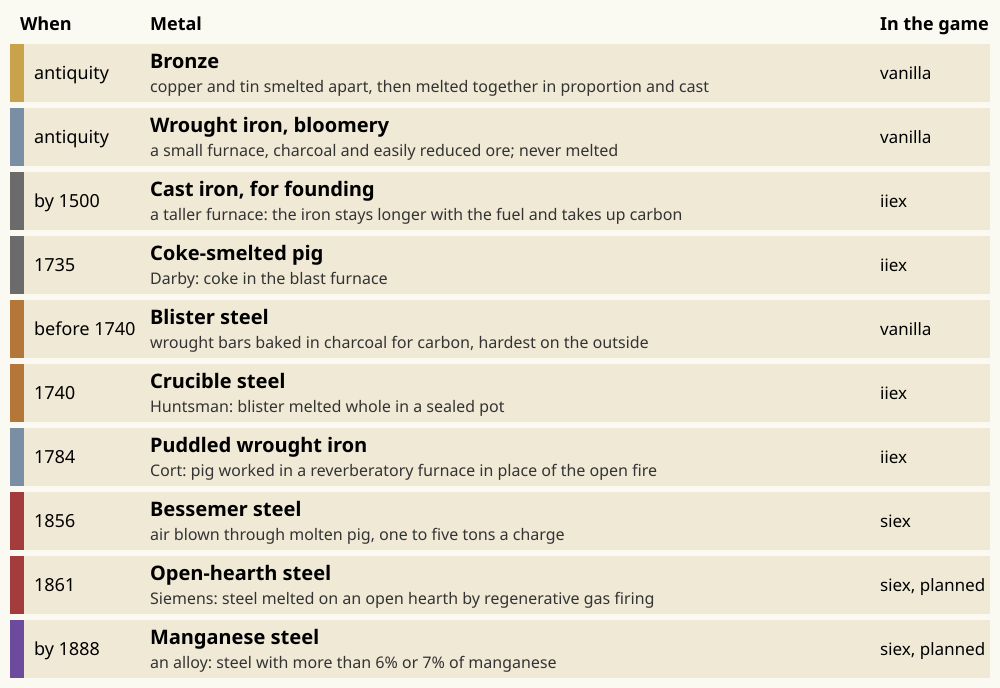
Bronze, and iron without melting. A bloomery makes iron in "one of the simplest of all metallurgical operations": a small furnace, charcoal and easily reduced ore (Bauerman p. 5). Bronze takes two smeltings and skilled mould work (Swank p. 1). The iron comes out as a spongy lump that is hammered, never poured (Bauerman p. 6).
Cast iron. As furnaces grew taller the metal stayed longer in contact with the fuel, took up carbon, and more of it ran out molten (Bauerman p. 7). Pig has been known from time immemorial, but its systematic use for founding cannot be traced with certainty before the end of the fifteenth century (Bauerman p. 9). Coke replaced charcoal in the blast furnace with Darby, 1735 (Bauerman p. 10).
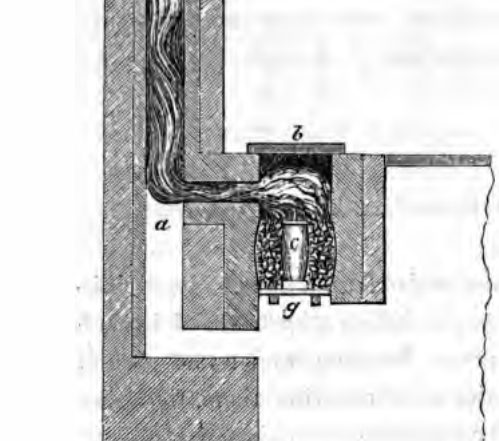
Steel by carbon added. The old way starts from wrought bar. Bars packed in charcoal in a closed chest take up carbon through the solid metal, come out as blister steel, and are hardest outside (Fairbairn Iron p. 208). In 1740 Huntsman at Sheffield melted it in pots and cast it (Swank p. 54), which is why a crucible steel is one piece of even metal.
Wrought iron in quantity. Cort's puddling of 1784 replaced the open fire of the forge with a reverberatory furnace (Bauerman p. 10), so that pig was worked on a hearth apart from the fuel. See puddling and the reverberatory furnace.
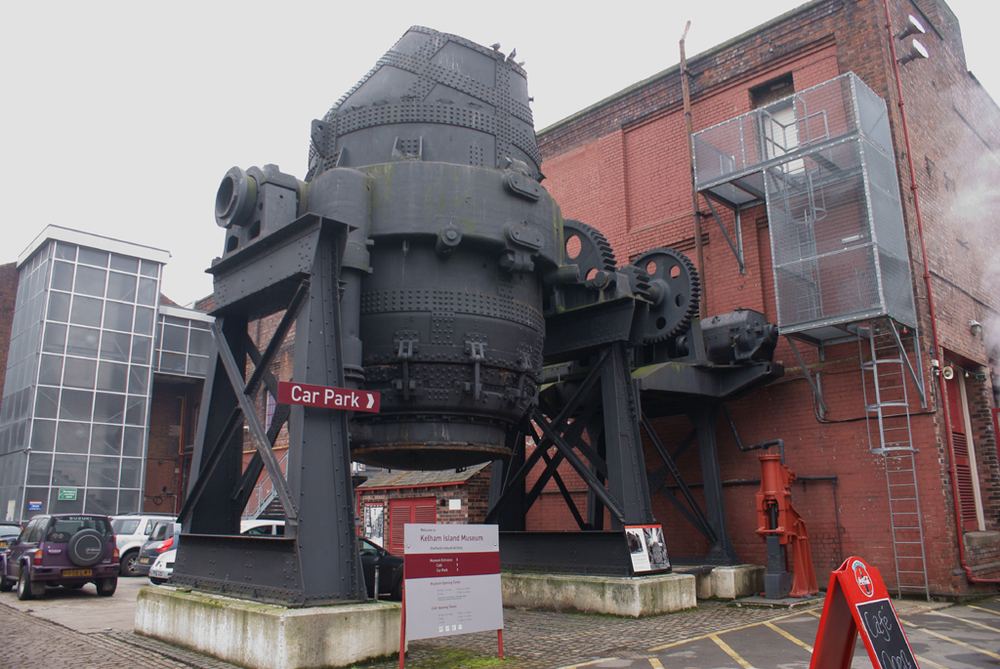
Steel by carbon taken out. Bessemer's 1856 paper blew air through molten pig, one to five tons a charge (Bessemer p. 157). Blowing leaves the metal short of carbon, and his patent of 1855 already covered putting carbon back with molten pig (Bessemer p. 258). Bauerman, writing while it was new, calls the product "admirably adapted for use in railway and other engineering work in place of wrought iron" (Bauerman p. 11). The open hearth followed, with Siemens's experiments from 1861 and his works in 1865 (Swank pp. 419-420).
What an alloy is
Bauerman uses the word for carbon itself: iron "alloyed with a maximum" of carbon is cast iron (Bauerman p. 3). Carbon was singled out because "a given content of carbon will confer greater hardness and strength, with less accompanying brittleness, than any other element", with exceptions in hard steels made by manganese, chromium or tungsten (Campbell p. 344).
Those exceptions are the alloy steels. Manganese is the odd one: above about 1.5% to 2% the metal grows brittle and nearly worthless, and only at 6% or 7% and more does it become extremely hard and, strangely, tougher when quenched (Campbell p. 354). Nickel gives high elastic limit and toughness under shock for armour and forgings (Campbell p. 23). Tungsten was in patents by 1857 (Percy p. 192).
These elements arrive as iron-rich reagents, not as pure metal. The spiegeleisen used in England seldom exceeded 9% manganese (Bessemer p. 273), and the first ferromanganese, from a reverberatory gas furnace, ran 20% to 25% (Bessemer p. 288).
Period basis, and what is the game's own
- Period: three irons set apart by carbon, each made by a different route (Bauerman pp. 3-4). The game keeps them as separate materials, each from its own furnace: pig and cast iron from the blast furnace and cupola, wrought iron from the puddling furnace, as in the blast furnace practice.
- Period: though other elements count, "the carbon usually determines the class in which the material belongs" (Campbell p. 344). The game has no carbon figure on a metal. The grade is the metal's identity: a machine accepts it or refuses it.
- The game's own: the ladder as a set of promises. Pig iron promises nothing and is only a feedstock. Cast iron can be poured and will shatter in tension, so it builds the low-pressure machines. Wrought iron can be forged and passes for pressure work. A metal that promised nothing new would not be on the ladder.
- The game's own: bronze comes before iron because the base game puts it there. See vanilla against reality. The books do not agree that this was the real order; see below.
- The game's own: blister and shear steel are the base game's and are left as they are. Crucible steel adds one step above them for the length of a tool's life. It is planned to gain a smithing route; no survival route makes its tools today.
- The game's own: planned, an alloy inherits the grade of the steel it is made from, so manganese steel made on a Bessemer base carries a lower pressure limit than the same steel on an open-hearth base. It is a penalty and not a refusal. The books do not state such a rule.
The numbers
No carbon figure is simulated: these are the targets that fix each metal's character (see how the numbers are scaled). Masses follow the drawn shape (scale and units) and belong to the item pages. "Planned" is a value in design; others are in the game now.
| In the game | Period figure | How it was scaled | Game value |
|---|---|---|---|
| Wrought iron, carbon | Never more than 0.25% (Bauerman p. 4) | Not scaled | Under 0.1% |
| Cast iron and pig, carbon | 2% to 6% (Bauerman p. 3) | Inside the period range | Cast about 3.0%, pig about 4.0% |
| Crucible steel, carbon | Maximum hardness and tenacity at 1.0% to 1.5% (Percy p. 112) | Inside the period range | About 1.2% |
| Shear steel, carbon | None found | The game's own | About 0.8% |
| Mild steel, carbon | Nearer malleable iron, no figure (Bauerman p. 5) | The game's own | Planned about 0.2%, Bessemer and open-hearth |
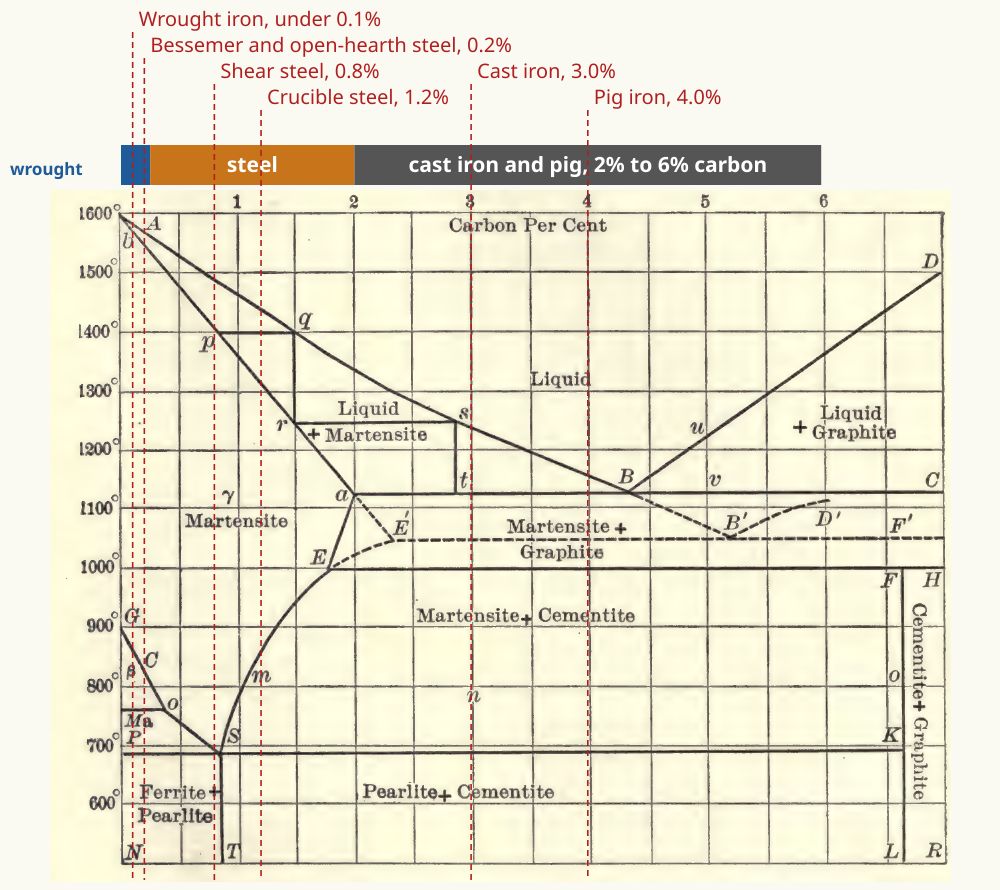
| Melting, pig iron | About 1160 C at 4.0%, read from the diagram (Campbell p. 312) | The game's own value, close to the diagram | 1150 C |
| Melting, cast iron | About 1240 C at 3.0%, read from the diagram (Campbell p. 312) | The game's own value, a little under the diagram | 1200 C |
| Melting, crucible steel | About 1440 C at 1.2%, read from the diagram (Campbell p. 312) | The game's own value, at the diagram's pure iron | 1600 C |
| Cast iron in tension | About 7 tons a sq in (Fairbairn Iron p. 230) | Not a stat | Cast parts only; it builds the low-pressure machines |
| Wrought plate in tension | Mean 22.5 tons a sq in with the fibre (Fairbairn Iron p. 245) | Not a stat | Passes for pressure work and boilers |
| Cast iron, crushing against tension | 4.5 to 6.7 times, by iron (Fairbairn Iron p. 227) | Not a stat | Machine beds and frames |
| Tool durability, crucible steel | None found | The game's own, a first number | 3300 against 2600 for the top preset |
| Manganese steel, manganese | Above 6% or 7% (Campbell p. 354) | The game's own target | Planned about 12.5% |
| Spiegeleisen, manganese | Seldom over 9% in England (Bessemer p. 273) | Period figure | Planned low, about 4.5% carbon, dose about 10% of a heat |
| Tin bronze | None in the iron books | The base game's | About 88% copper, 12% tin |
Open, and what you can tell us
The order at the bottom of the ladder is disputed in the books here. Swank reports Percy arguing from the furnace that "the age of iron would have preceded the age of bronze", the bloomery being a much simpler thing than two smeltings and a founder's mould, and discredits a bronze age before iron (Swank p. 1). The game follows the base game's bronze first. The books at hand also give no date for shear steel. If you know a source on which came first in a given region, or on when shear steel was first made, we would like to read it.
Picture credits
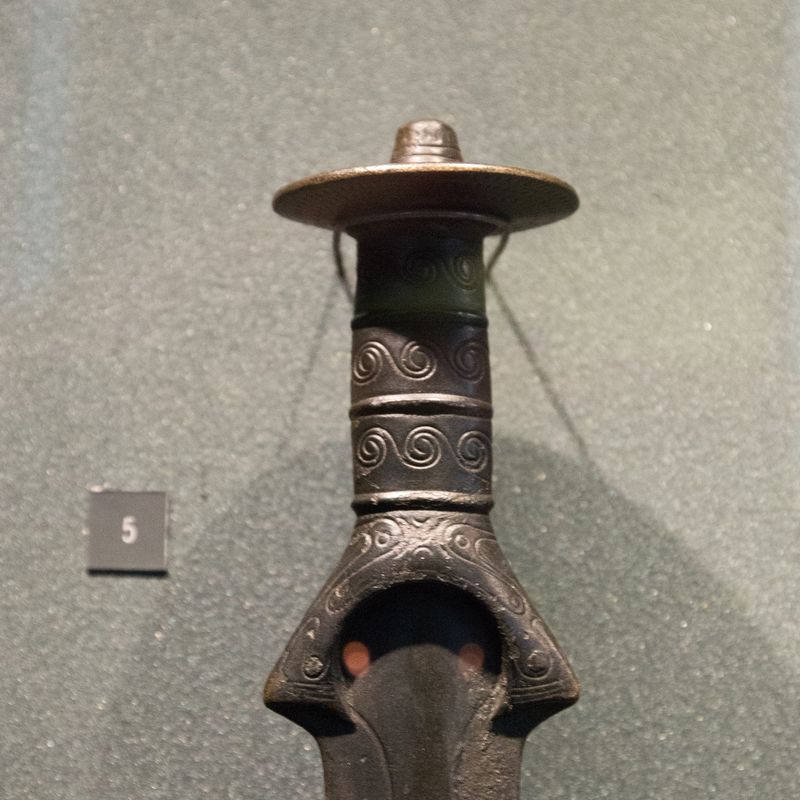
- Sword, Late Bronze Age, City of Prague Museum: Zde, CC BY-SA 4.0, cropped.
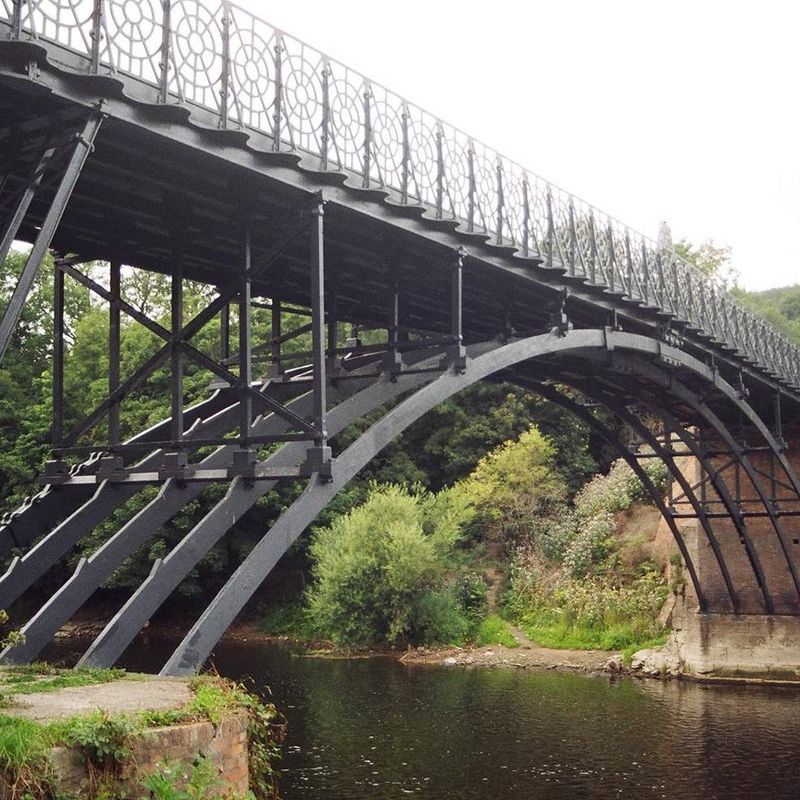
- Coalport Bridge: Peterlewis at English Wikipedia, public domain, cropped.
- Fig. XV-H, with labels drawn over the plate from Bauerman p. 3 and the game's targets: Campbell, The Manufacture and Properties of Iron and Steel, p. 312, Library page.
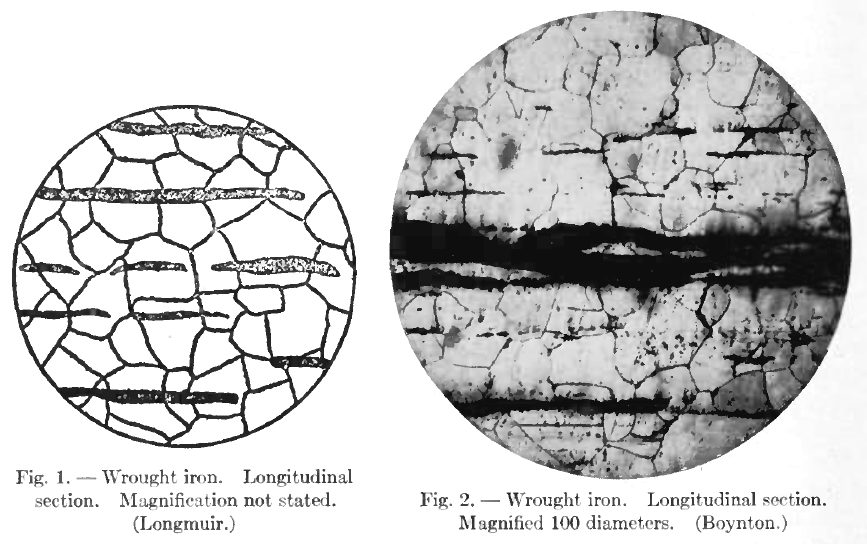
- Puddled iron, longitudinal section: Albert Sauveur, public domain.
- Fig. XV-B, No. 4: Campbell, The Manufacture and Properties of Iron and Steel, described at Campbell p. 300, cropped, Library page.
- The order of the ladder: drawn for this page from Swank pp. 1, 54 and 419, Bauerman pp. 3-10, Fairbairn Iron p. 208, Bessemer p. 157 and Campbell p. 354.
- Fig. 66: Fairbairn, Iron, its History, Properties and Processes of Manufacture, p. 208, cropped, Library page.
- Bessemer Converter, Kelham Island Industrial Museum: cooldudeandy01, CC BY 2.0.
Comment or suggest something in the Expanded thread on the Vintage Story Discord