
Pipes and the steam main
A steam main is the plumbing between the boilers and the engine, and for most of the period it was cast iron, bolted up in lengths. How to lay one in the game is in the pipe networks guide, and the blocks are in the catalogue. This page is about the real pipe, how it was made and joined, and why higher pressure moved to welded tube.
How a cast pipe was made
Bolland, writing for iron-founders in 1892, shows a trade that cast every pipe whole around a core, flange or socket included. The bore is the core's surface and nothing is bored afterwards (Bolland pp. 209-232).
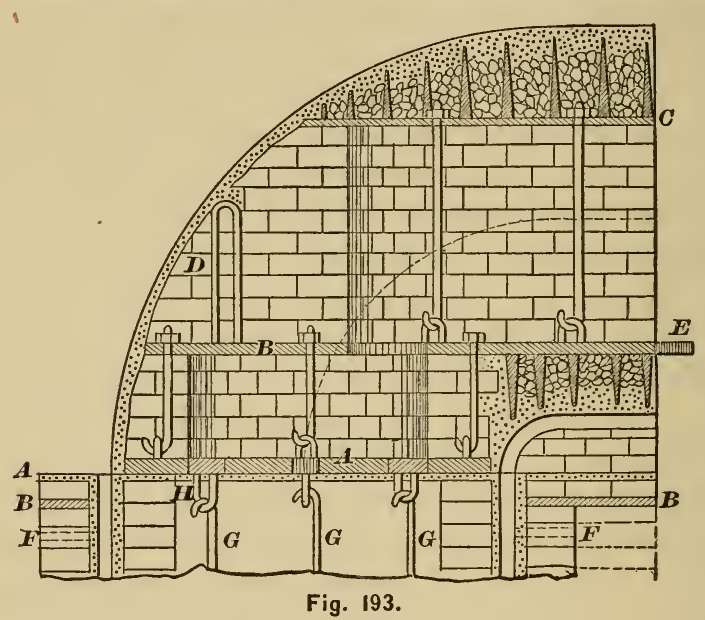
Most pipe was made in one of three ways, by size and by how many were wanted. Some shops kept "six to ten men" constantly on jobbing pipes from 2 to 24 in (Bolland p. 142). Pipes up to 18 in of any form could be rammed in green sand from a kit of wedge-shaped half rings (Bolland pp. 324-332). Very large elbows were made in short lengths lying "on the flat", but a long piece with an elbow on one end was better built standing up (Bolland p. 227).
The straight pipe of the waterworks trade went on end. At the Vauxhall Foundry in Liverpool, about 1863, "large numbers of straight lengths were being swept on end in loam" for the corporation's order, and a new arrangement was being built for socket pipes 3 ft across and 10 ft long (Bolland p. 335). In loam a sweep turning on a spindle strikes the round face (Bolland p. 227), and where patterns were practicable the same foundry rammed others in green sand (Bolland p. 335). Later the "great and increasing demand" brought plants built only for pipe (Bolland p. 336). A core mixture that let a casting be run from the top was "an absolute necessity sometimes where a sound casting is required" (Bolland p. 125).
Joining it
Before the wrought-iron tube, a joint was a thing to be made tight on site, with what the fitter could caulk or bolt.
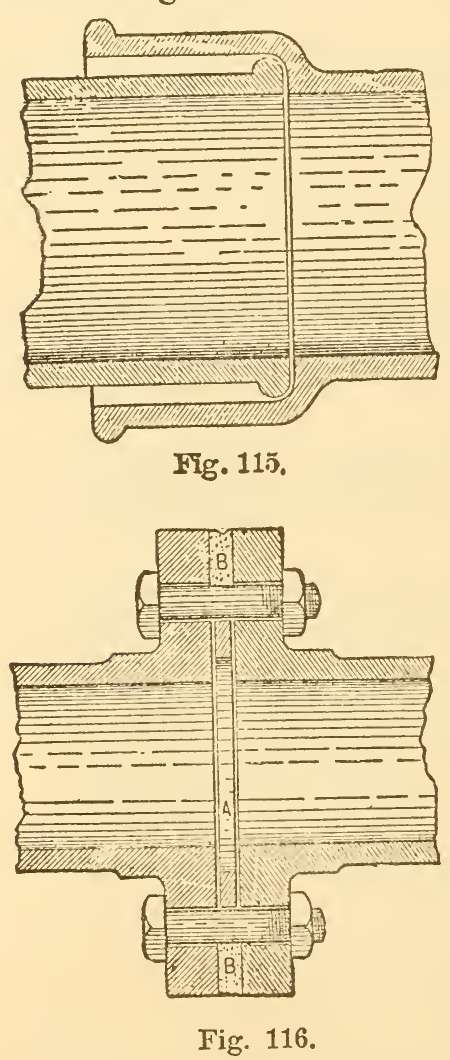
Iron borings mixed with sal-ammoniac rust together into a solid joint, and the rust joint between flanges is described in the engine books (Tredgold pp. 254-255, Farey p. 487, Bourne 1846 p. 227). Bolts draw the flanges up; the packing is what holds the steam. Hawkins's next step is the facing or turning up of the flanges, with a gasket of rubber, copper, paper or cement between them, and for some work a lip and recess to keep the gasket from being blown out (Hawkins pp. 248-249).
Wilson explains why cast iron was trusted here and not in the boiler. Cast iron "is almost invariably used, except with marine boilers, for pipes to carry the steam to the engine cylinders at the full boiler pressure" (Wilson p. 27), and the engine cylinders were of cast iron too, though he called it foolhardy to make a boiler of the same material to work at the same pressure. His reason is the fire: in the cylinder the heat is evenly spread, with no furnace and no cold draught through the doors, where a horizontal vessel with a fierce fire under it is severely strained by the unequal expansion (Wilson p. 27). The danger was always the casting itself. "A very slight hidden or surface defect, in an unsound casting, is sometimes sufficient to lead to a sudden explosive fracture" (Wilson p. 26).
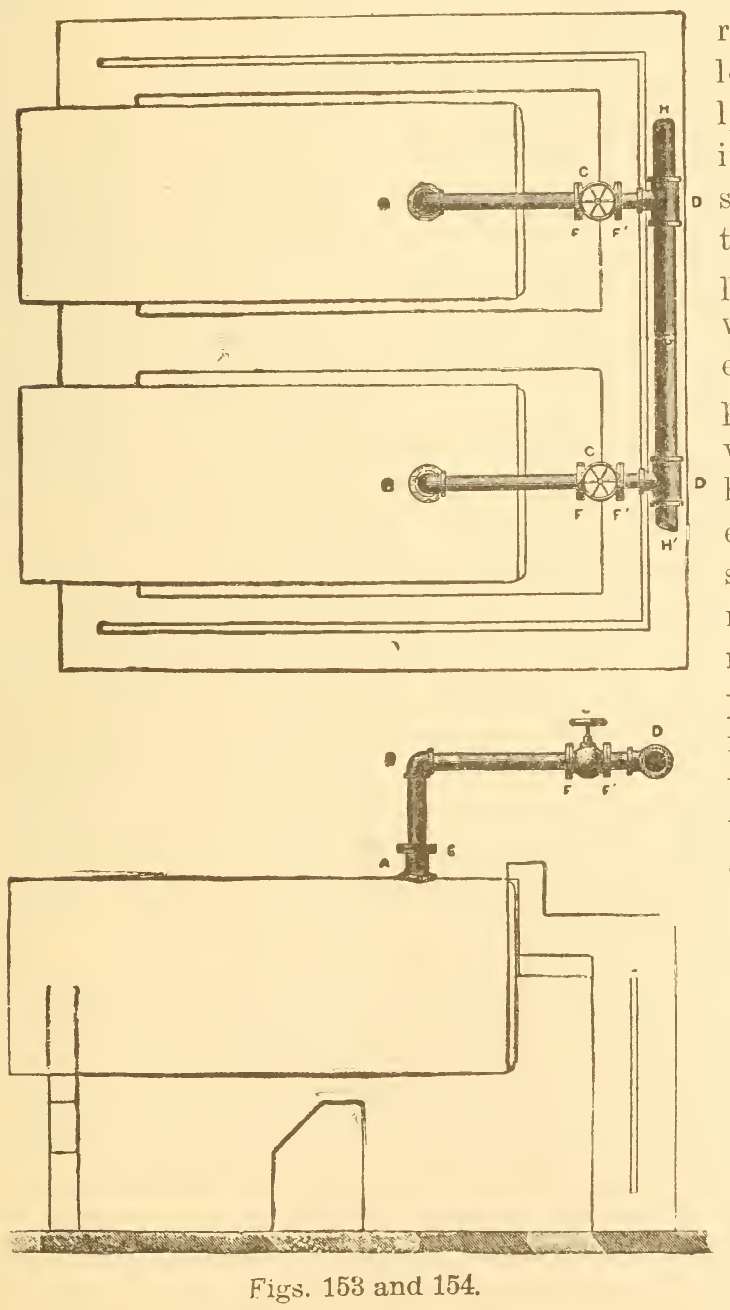
A main also has to move. Wrought iron was reckoned to grow 1/150,000 of an inch for each inch of length and each degree, so a 100 ft pipe heated to 338 degrees wants 2.7 in of play in an expansion joint (Hawkins pp. 276-277).
Why higher pressure moved to welded tube
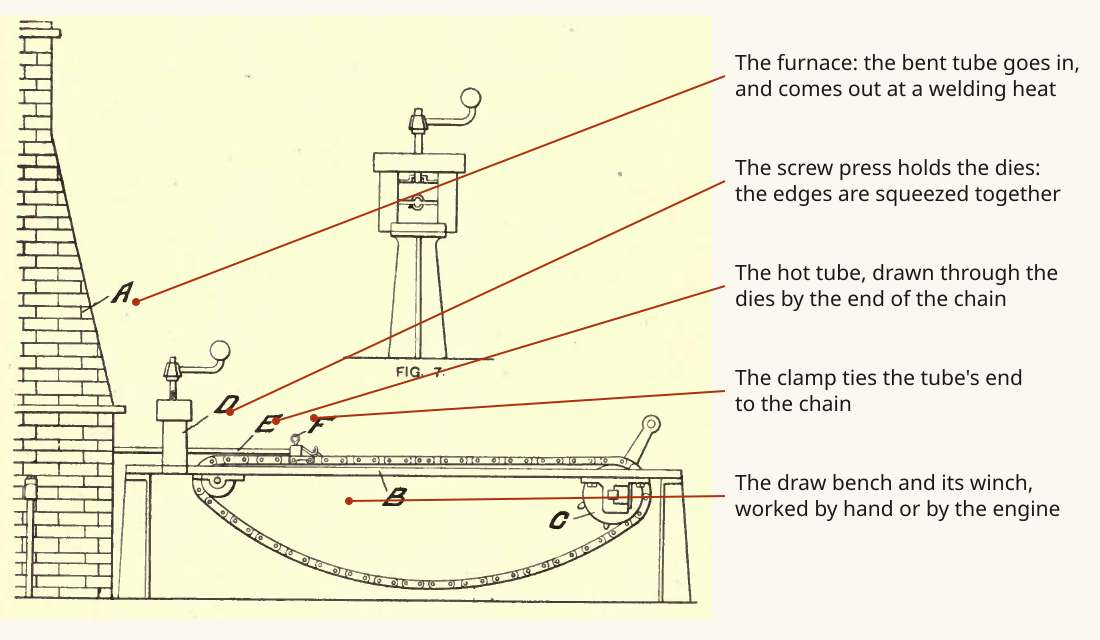
Wrought iron cannot be poured, so a tube of it has to be made from a strip by bringing the edges together and welding them. For a long time this was the gunsmith's job, a "skelp" bent round a mandrel and hammered up piecemeal (Marks p. 2).
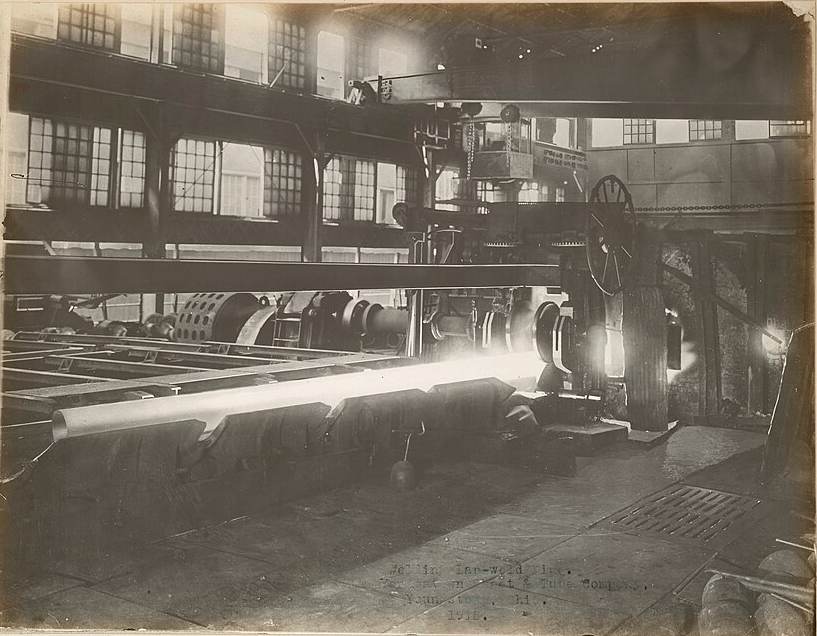
Lap welding came next for the larger sizes: Russell's specification of 1845 rolls the overlapped seam against a mandrel (Marks p. 122). The processes in use were "evolved and established in and around Wednesbury" between 1827 and 1850 (Marks p. 122). By Hawkins's day the trade divided pipe at about 1 1/4 in, butt-welded below and lap-welded above (Hawkins p. 248). Marks sets the limit for steam tube at 2 in, and in some cases less (Marks p. 124).
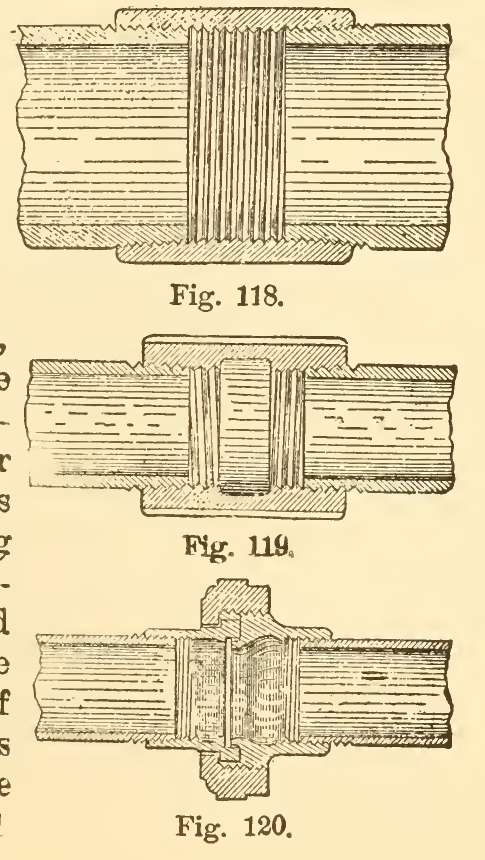
Hawkins gives the welded pipe's advantages as "lightness, the ease with which various lengths can be obtained and its strength" (Hawkins p. 249). Wrought iron should have an ultimate strength of 20 tons a square inch (Marks p. 124) against about 6 for cast iron (Wilson p. 26). The weld is the weak line: scale caught in it can leave a tube "not even gas tight", and the screw cut on its end thins the wall, so every tube was given a hydraulic test before it left the works, seldom less than 300 lb a square inch for steam (Marks p. 124).
Period basis, and what is the game's own
- Period: cast pipe with flanges cast on, the bore cored and never bored (Bolland pp. 209-232). The game's cast segments are made from a cast part with a core, the flanges drilled, and the bore left as cast, and this route is planned: the cast segments ship without a recipe today.
- Period: straight pipe swept on end, large elbows lying or on end by size (Bolland pp. 227, 335). The game casts a one-block straight on end in the pit flask, and two- and three-block lengths lying in a closed flask, planned. The choice of on-end is the sand the flasks hold, a limit of the game's own.
- Period: a rust joint caulked between the flanges, then faced flanges with a gasket (Hawkins p. 248, Tredgold pp. 254-255). The game plans the same two grades: flanges as cast, and an optional facing at the lathe that raises the pipe's limit. No book gives a pressure for either joint, so the grades are the game's own.
- Period: wrought pipe screwed into couplings and fittings, with the flange union on the largest sizes (Hawkins pp. 249-251). The game's rolled pipe is octagonal with screwed ends and no flange, so a rolled run joins only rolled pipe and machine ports. The period flange union does not exist in the game.
- Period: Marks's butt- and lap-welded tubes are of iron, from strip the tube maker bought rolled from the ironmaster (Marks p. 122). The game's rolled pipe is of open-hearth steel, planned to come from skelp cut off the cast bloom, one skelp to a straight, bent in a machine, with no separate weld.
- Period: mains on rollers, short pieces of round bar or two-inch cast pipe (Overman p. 414, for blast mains). The game plans drawn supports on the same lines.
- The game's own: pipes do not grow with heat, and a main needs no expansion joint.
- The game's own: steam stays steam in a pipe. A run sheds temperature, but water is made only at a device that condenses. There is no water hammer and no drip pipe.
- The game's own: an over-pressure run does not crack without warning. A pipe past its rating is given a grace of 30 seconds and then one segment goes, with no chance of a hidden flaw. See vanilla against reality.
The numbers
Pipe ratings are the game's own ladder (the scaling page); the books give materials and test pressures, not a working pressure for a pipe line. "Planned" is the rating in design. The boiler each one has to carry is on the Cornish boiler page.
| In the game | Period figure | How it was scaled | Game value |
|---|---|---|---|
| Plated pipe, bursts at | None for a pipe line | The game's own | 2.5 atm |
| Cast pipe, rough, works / bursts at | None for a pipe line; rust and packed joints (Hawkins p. 248) | The game's own, set against the Cornish boiler's working pressure | Today one rating, 5.0 atm burst; planned 3.6 / 4.5 atm |
| Cast pipe, faced, works / bursts at | 80 to 90 lb, a boiler of vertical cast pipes 4 or 6 in across (Wilson p. 27) | The boiler's figure, taken to the pipe | Planned 6.0 / 7.5 atm |
| Rolled pipe, bursts at | Hydraulic test seldom under 300 lb, about 20 atm, for steam tube (Marks p. 124) | A test pressure, not a working one; the rating is the game's own | Planned about 20 atm; today 12 atm |
| Flow, plated / cast / rolled | None | The game's own | 50 / 120 / 250 L/s |
| Strength of the metal | 6 tons a sq in cast (Wilson p. 26), 20 tons a sq in wrought (Marks p. 124) | Not used directly | Differs by tier only through the ratings above |
| Expansion | 2.7 in on 100 ft at 338 degrees (Hawkins pp. 276-277) | Not modelled | None |
Open, and what you can tell us
Bolland describes straight pipe swept on end and large work built standing, and never says why, and neither does any other book here. Plain physics offers a reason: gas and dross float, and in a mould stood on end they gather at the top end instead of along one whole side of the pipe. If you know a founder's source that states it, or that gives a working pressure for a cast steam main as a line, we would like to read it. The books at hand also do not say how the bolt holes of a pipe flange were made, so the game drills them as it drills other cast work.
Picture credits
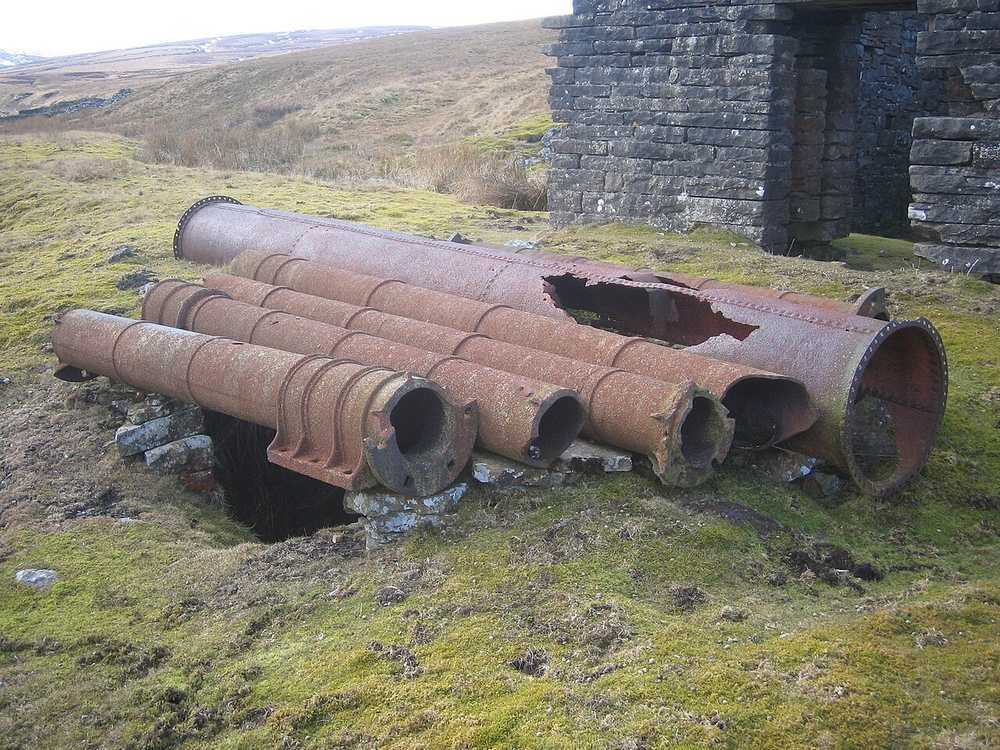
- Cast iron pipes over Lane End mine shaft: Chris Twigg, CC BY-SA 2.0.
- Welding lap-weld pipe, Youngstown Sheet and Tube, 1918: US National Archives, photographer not recorded, public domain, cropped.
- Fig. 193: Bolland, The Iron-Founder, p. 228, Library page.
- Figs. 115 and 116, Figs. 118 to 120, Figs. 153 and 154: Hawkins, Maxims and Instructions for the Boiler Room, pp. 248, 249 and 277, Library page.
- Figs. 6 and 7: Marks, The Manufacture of Iron and Steel Tubes, p. 6, labelled for this page, Library page.
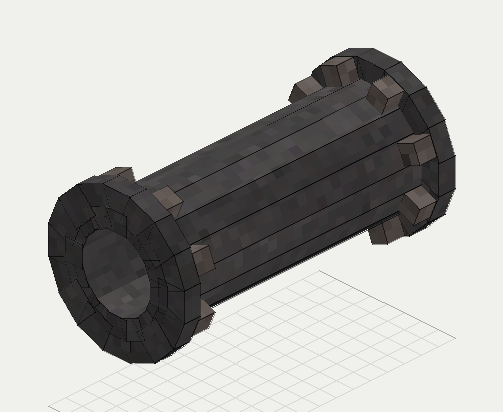
- The game's cast main: the mod's planned drawing.
Comment or suggest something in the Expanded thread on the Vintage Story Discord