
Vice bench and drawing table
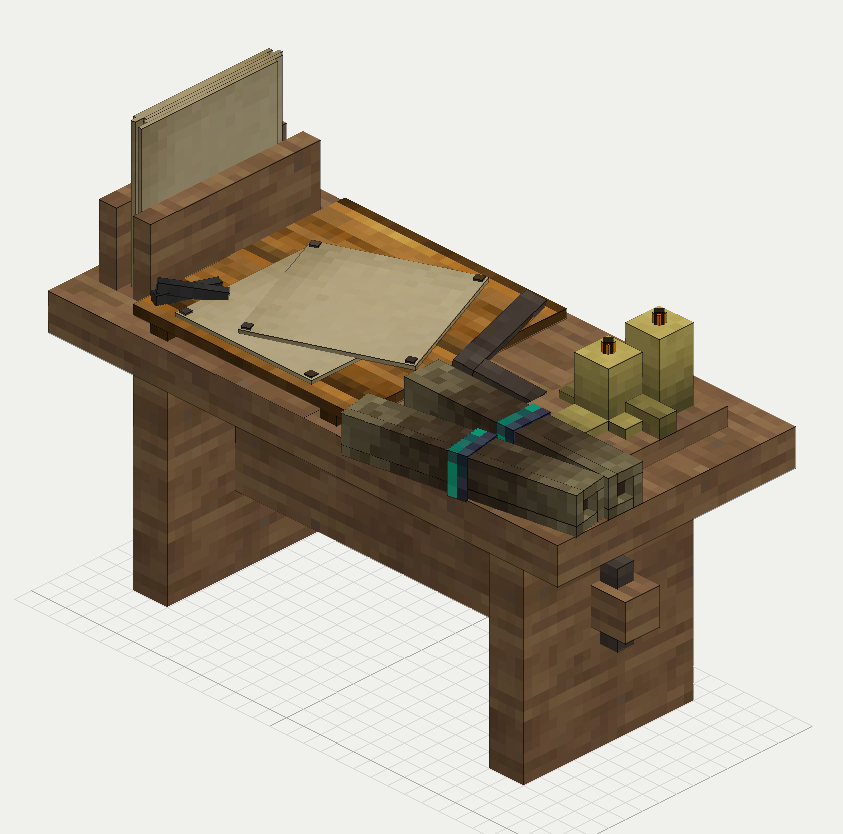
A casting or a forging comes out rough. Before it could go into a machine, someone had to make its faces flat, its holes true and its sizes right, and for most of the age of iron that someone stood at a bench with a vice, a chisel and a file. Beside him lay a drawing that said what the part had to be. How to draft and assemble in the game is in the diagrams guide. This page is about the real work and how the game's two stations follow it.
Why the work began at a vice
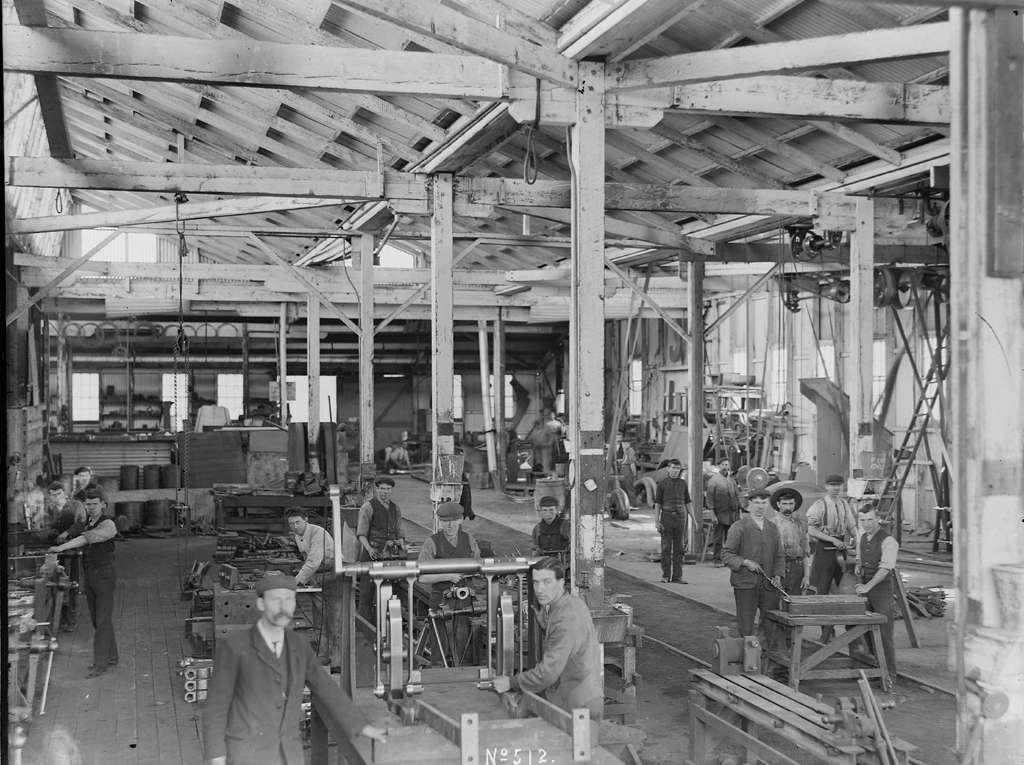
The chicken and egg of the machine shop is real. A planing machine makes flat surfaces, but its own bed has to be flat first. Nasmyth, who worked for Henry Maudslay in Lambeth from 1829, says that flat surfaces were sometimes got from the lathe and slide-rest, "but in most cases the object was attained by the dexterous use of the file", and that flat filing "then was, as it still is, one of the highest qualities of the skilled workman" (Nasmyth p. 148). As a boy he had watched the men's "dexterous use of the hammer, the chisel, and the file" (Nasmyth p. 73). Even after the planing machine came into the works, it was meant for the larger parts: "a very considerable proportion of the detail parts still continued to be executed by hand labour, in which the chisel and the file were the chief instruments employed" (Nasmyth p. 415).
The trade had a name to match. Rose names the "vice hand and erector" beside the lathe hand or turner among the men who use a shop's gauges (Rose p. 377).
How a surface was proved
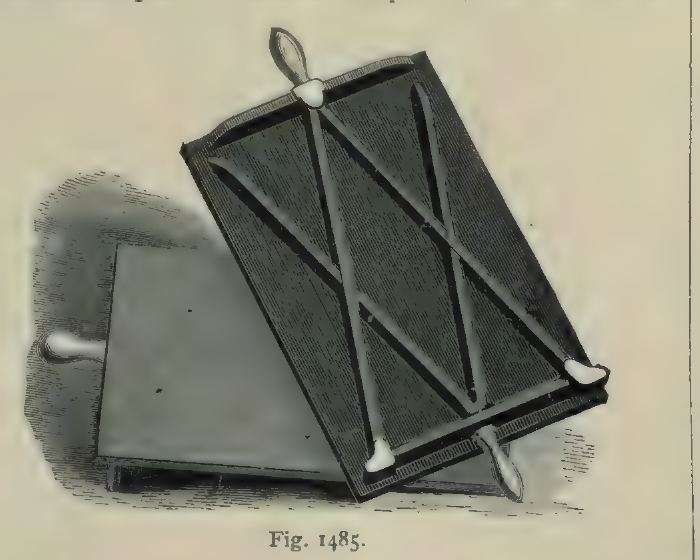
Filing by eye is not enough for a slide valve, so the bench carried its own standards. Maudslay had true planes "placed on the benches beside his workmen, by means of which they might at once conveniently test their work" (Nasmyth p. 148). They were made three at a time: rubbing each on each removes the high spots, and with three the errors cannot hide, because two plates can match while both are curved and a third will not match both. Hard steel scrapers took off the last points, until the plates would float on the air between them (Nasmyth p. 149).
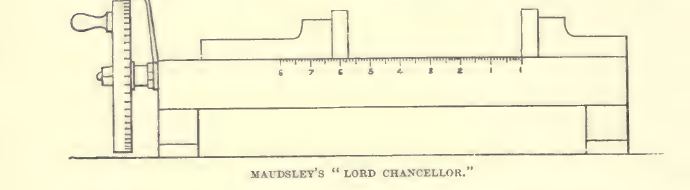
Measurement went the same way. Maudslay distrusted the verdict of callipers, whose answer depended on the hand that held them, and built an instrument he "always had on his bench beside his vice" (Nasmyth p. 149).
The scraper, in Rose's account, was a lathe finishing tool as well as a bench one, its edge shaped to the work and kept short to stop it chattering (Rose p. 333).
Why a drawing, and what a drawing table was for
A drawing lets a part be made by someone without its designer at his elbow. William Watson, a foreman at the iron foundry where the young Nasmyth spent his Saturday afternoons, drew his designs "on large deal boards", and they "were passed into the hands of the mechanics to be translated by them into actual work" (Nasmyth p. 92). In Mr. Field's office, after Maudslay's death, Nasmyth drew out the working drawings of a 200 horse-power engine from Field's rough sketches, and they "were handed out for execution in the various parts of the factory" (Nasmyth pp. 176-177).
Nasmyth put the value of it bluntly: "Mechanical drawing is the alphabet of the engineer. Without this the workman is merely 'a hand.' With it he indicates the possession of 'a head.'" (Nasmyth p. 125). Field kept his sketches of consultations in dated and indexed "talking books" on a shelf in front of his drawing table (Nasmyth p. 178). A drawing was kept, consulted and used again, which is what the game's diagram does.
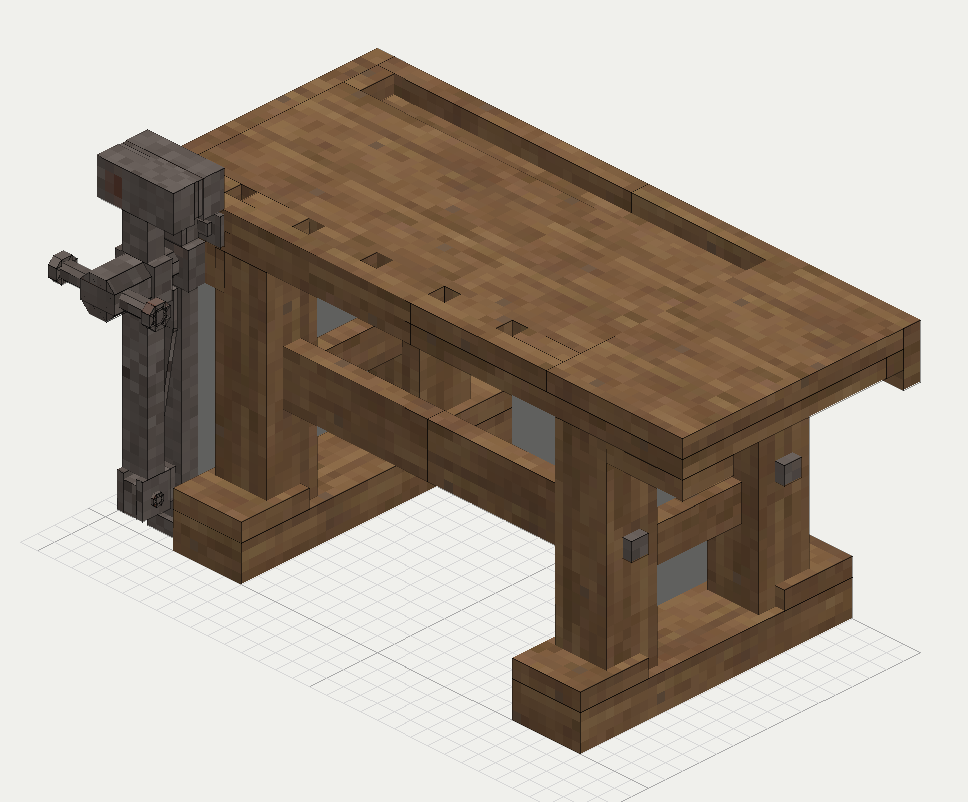
The game's order follows the shop's. The drawing table makes a diagram from a drawing medium and parchment. The bench takes the diagram and works the bill of parts to it. The diagram is never used up, as a works' drawing was not.
Why vice work comes before machine tools in the game
The game has the same closed circle as the period, and it is a sharper one. A shaper needs gears, and the machines that cut gears need gears. So nearly every machined part has a route by hand at the vice as well as its machine route: the same blank, seated in the vice, chipped with the chisel, filed, scraped where the part needs it and gauged with calipers. Each blank finishes to one part, so no diagram is needed for it. The hand route is the only way the machine line can start at all, and the machines then do the same parts with far less labour, as Nasmyth's small planing machine of 1836 was built to do (Nasmyth p. 415). See the lathe and the shaper and planer.
Period basis, and what is the game's own
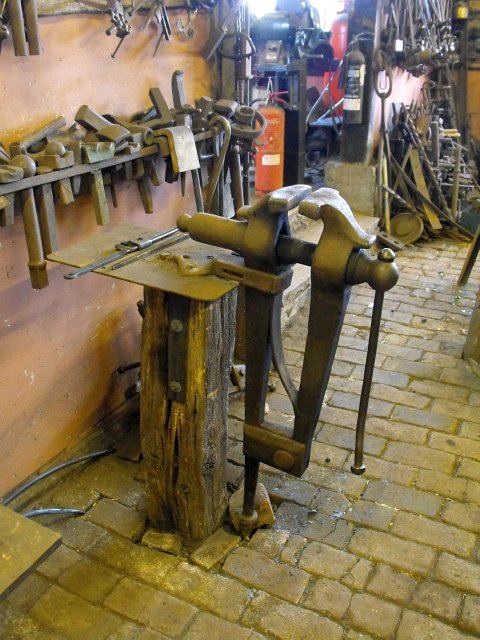
- Period: chipping, filing and scraping at a vice to prove a part flat and to size, with the surface plate and straight-edge beside it (Nasmyth pp. 148-149, Rose pp. 333, 382-383). The game's vice steps take the chisel, the file, the scraper and the calipers.
- Period: drawings were made on a board and passed to the men who worked to them (Nasmyth pp. 92, 177). The game's table drafts a diagram that the bench reads.
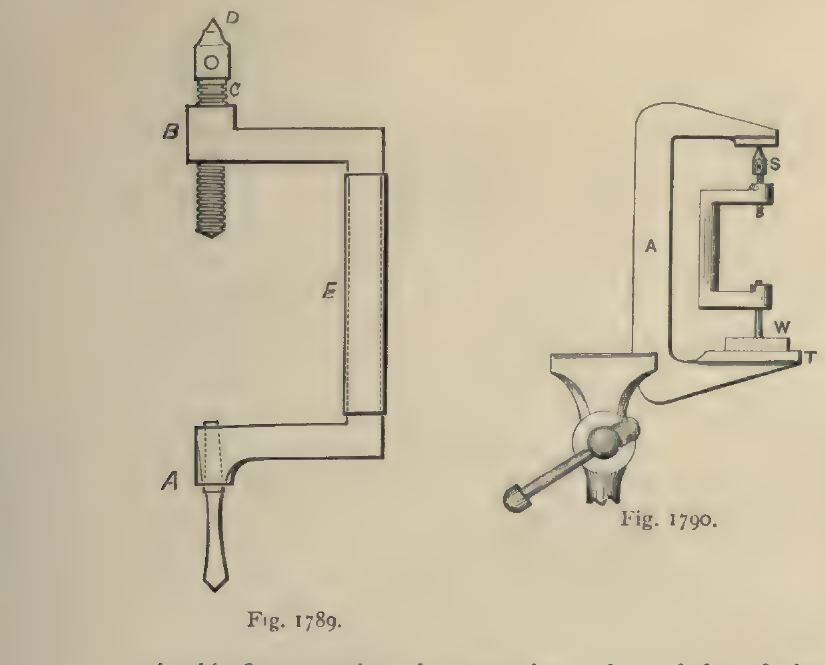
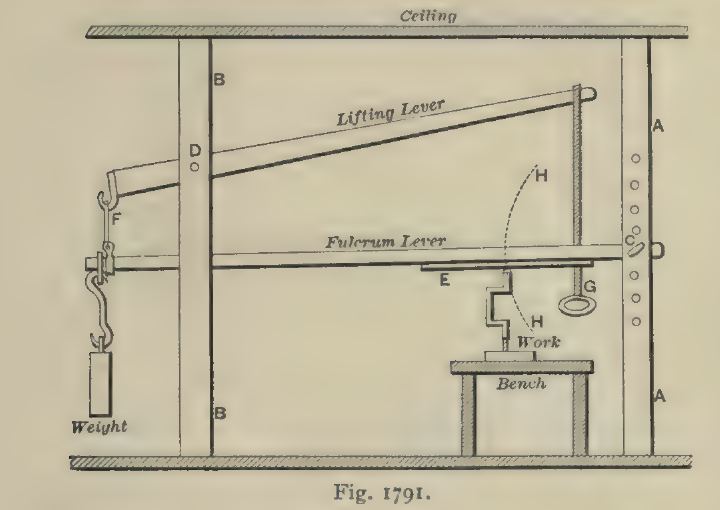
- Period: hand drilling at the vice or bench when no drilling machine was at hand (Rose p. 457). Drilling a blank at the vice with a hand drill is planned in the game.
- The game's own: the base game has no vice and no bench where a bill is worked with tools. See vanilla against reality.
- The game's own: a bench recipe is worked as a sequence of tools held in turn, with a hand animation for each. Seven recipes have this today; the rest of the bench's recipes are planned to. It stands for the work, and does not measure it: a part is not scraped more or less true.
- The game's own: a step is done by holding its tool for its time. The calipers pass or fail nothing, and no surface is proved against a plate.
- The game's own: a draft costs one piece of charcoal or coal and one sheet of parchment, both base-game materials, and any diagram can be drafted from the first table. The books give no price or material list for a shop's drawings.
Open, and what you can tell us
No book held here describes a drawing office from the inside: who drew, on what paper, how a drawing was copied before the blueprint, or how it travelled through the shop. The account above is one engineer's memory of two firms. The books at hand also do not say when the leg vice gave way to the parallel-jaw bench vice in fitting shops, or how a fitter's apprenticeship at the vice was arranged. If you know a source for any of these, we would like to read it.
Picture credits
- Leg vice, The Wharf, Berriew: Penny Mayes, CC BY-SA 2.0.
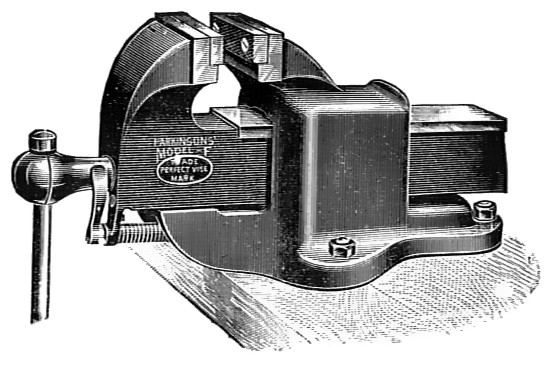
- Fitter's vice (Parkinson's Perfect): Rankin Kennedy, The Book of the Motor Car (1912), public domain.
- Workmen in locomotive fitting shop: Powerhouse Museum, Sydney, 1905, public domain.
- Figs. 1789, 1790 and 1791: Rose, Modern Machine-Shop Practice, p. 457, Library page.
- Fig. 1485: Rose, Modern Machine-Shop Practice, p. 383, Library page.
- Maudslay's "Lord Chancellor": Nasmyth, p. 150, Library page.
- The game's vice bench and drawing table: the mod's drawings.
Comment or suggest something in the Expanded thread on the Vintage Story Discord