Tub Blast Machine
Mechanically driven twin-tub bellows that supplies cold blast air.
The blower is the tier's only source of blast air, and it wants nothing but a turning axle: couple a waterwheel or a windmill to the cell above it and it starts moving air on its own. Below an axle speed of 0.15 it delivers nothing at all; output climbs linearly from there and reaches its full 45 L/s at 0.45. A vanilla waterwheel in rapid water turns it at about 0.3, for half the output, and a windmill in a good wind turns it at up to 0.6, for all of it. Run Plated Piping (Straight) from its port to the tuyeres it feeds.
See Furnaces and heat for the pressure a burden demands and Pipe networks and pressure for the plumbing between them.
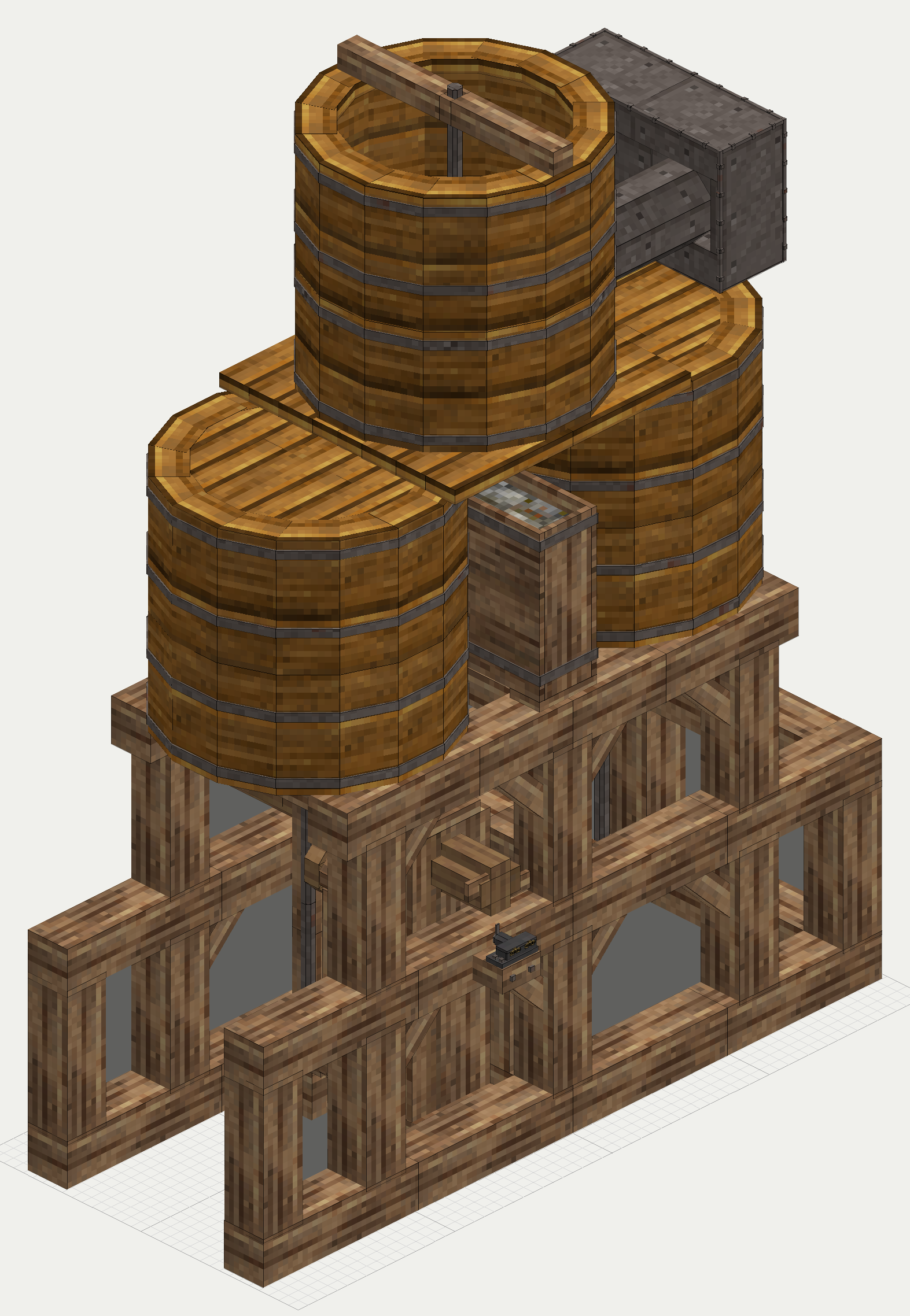
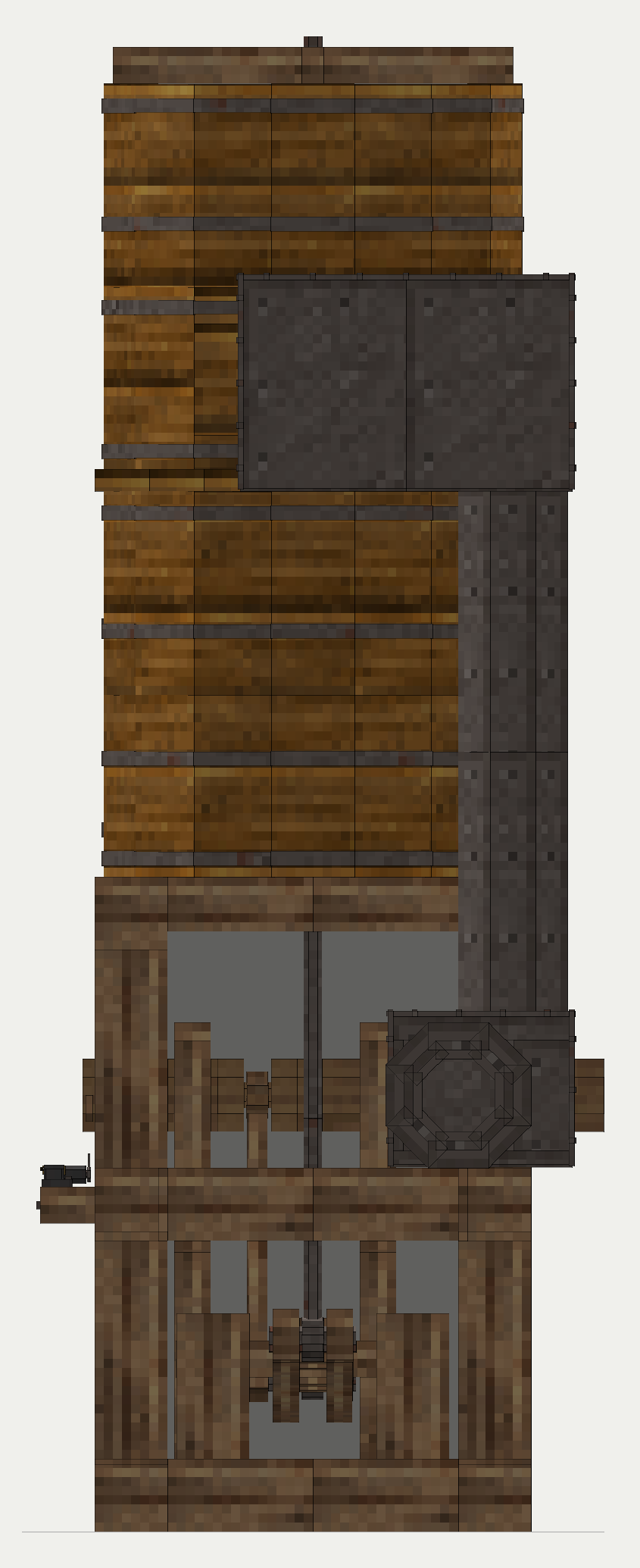 north
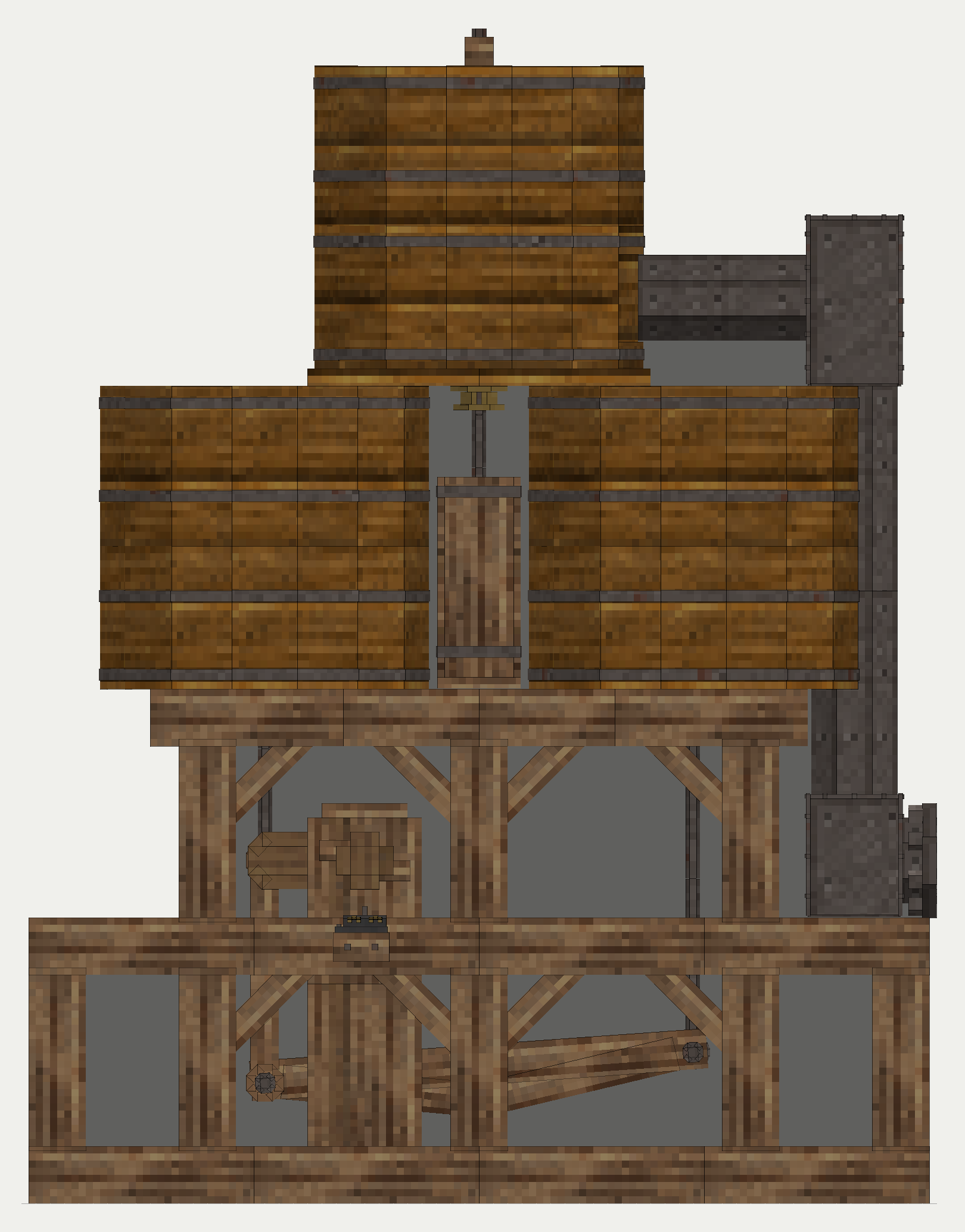 east
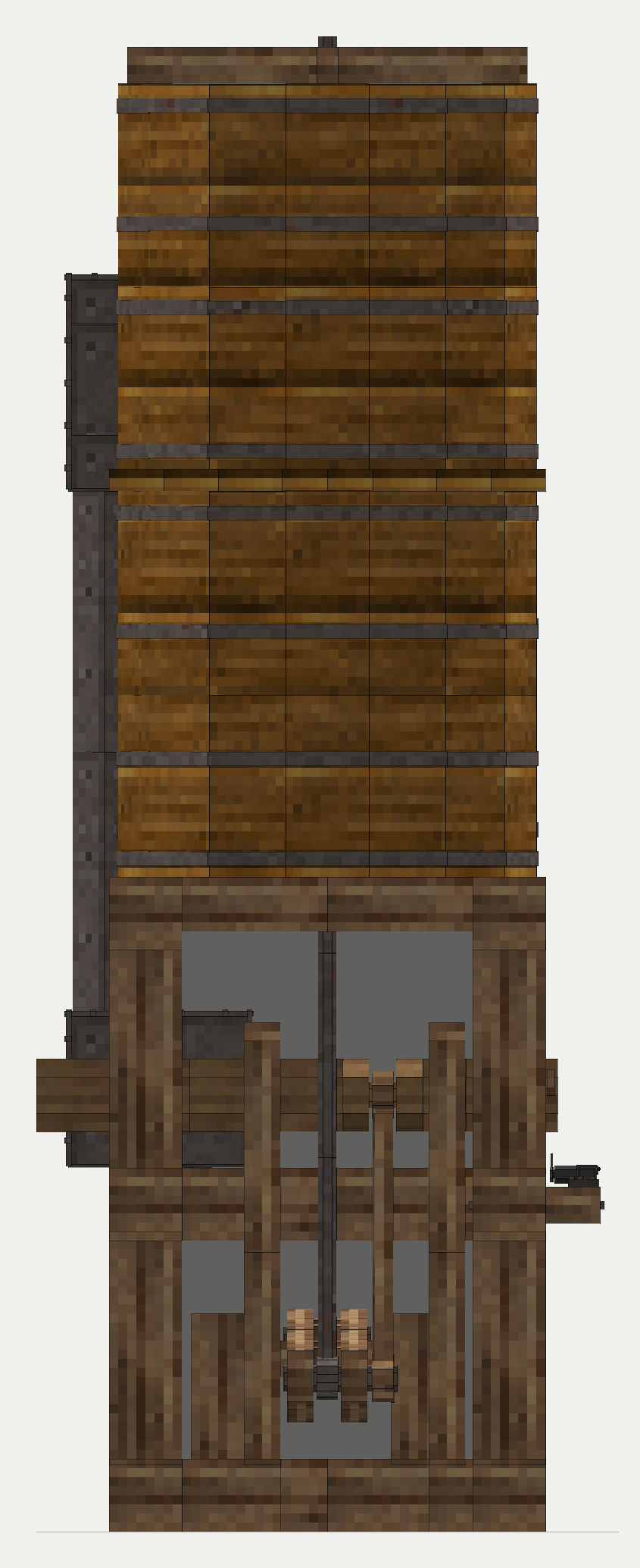 south
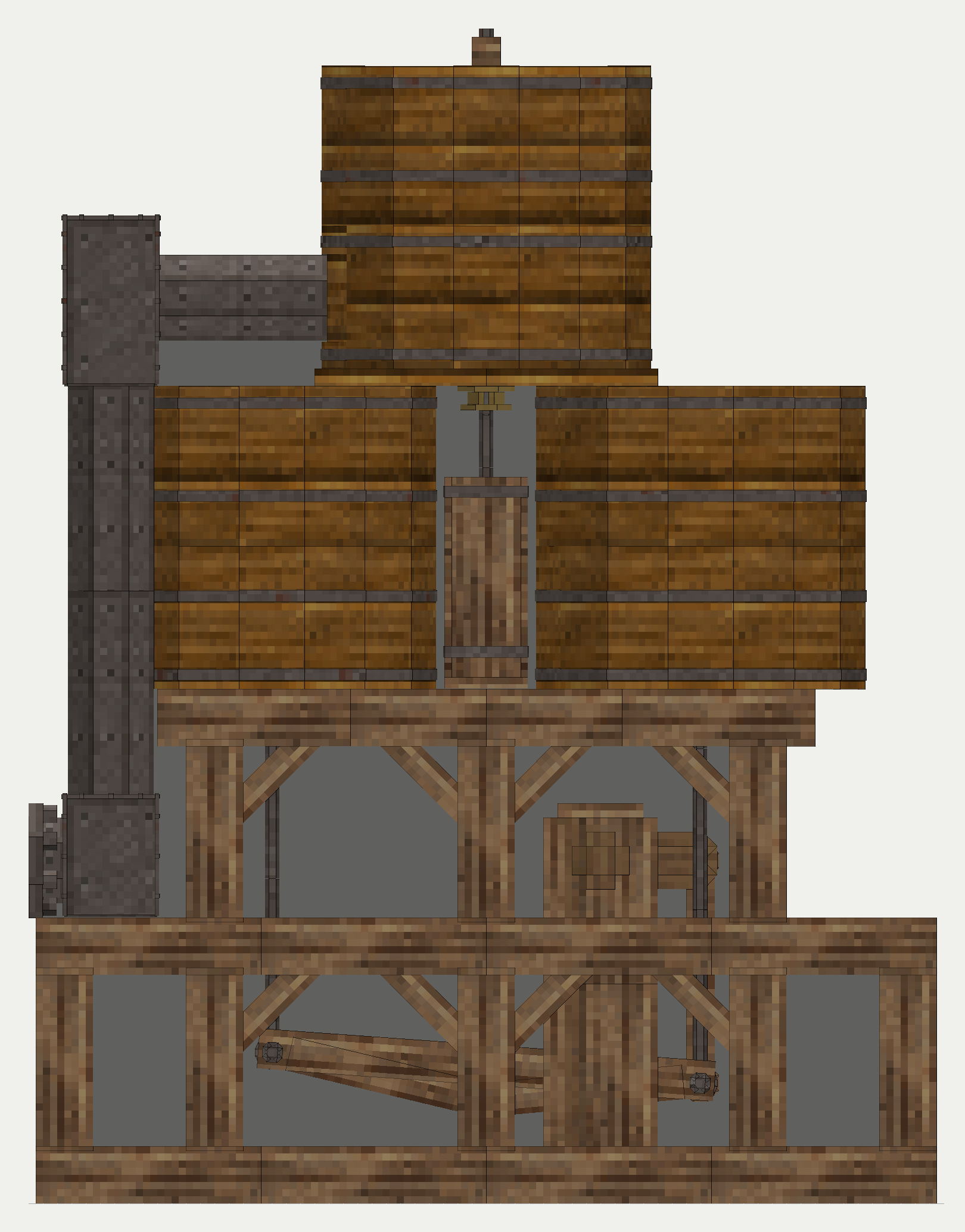 west
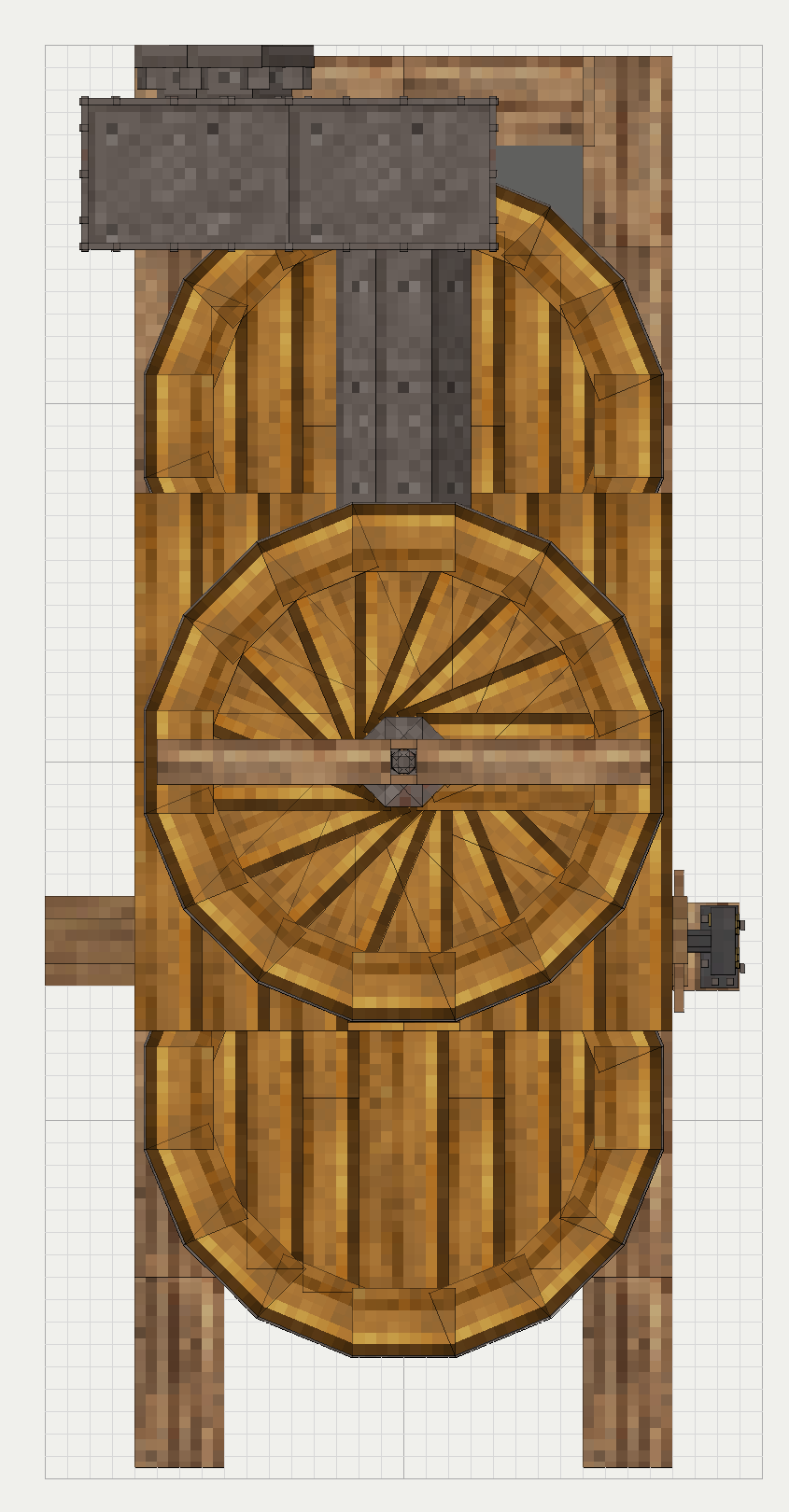 top
Made by
| any Board x 3 | Nails and strips (Iron) |
| Tub Blast Machine | |
Needs: 3 any Board, 1 Nails and strips (Iron); makes 1 Tub Blast Machine
Amounts are the mod's defaults; the recipe-cost level changes them (see recipe cost levels).
Built in place
| Stage | Materials |
|---|---|
| 1 | none |
| 2 | Leather x 4 |
| 3 | none |
| 4 | none |
| 5 | none |
Needs: 4 Leather
Amounts are the mod's defaults; the recipe-cost level changes them (see recipe cost levels).
Crafting chain
- Planks are cut from logs, nails are forged from iron ingots at the anvil, leather is tanned from hides, and the Tub Blast Machine Diagram is drafted at the design table.
- At the Vice Bench the diagram goes in the bench's diagram slot and 3 planks and a nail in the crafting grid; a hammer held on the bench makes the blower's frame, which stands at the first stage when placed.
- Holding right-click on the frame with a hammer in the main hand and 4 leather in the hotbar adds the tubs, after two hits; the three stages after that are built the same way with a hammer and take no further materials.
- The finished blower has a turning axle in the cell above it, and plated pipe runs from its port to the tuyeres.
Planned recipe
This recipe is planned and not yet in the game; until it lands, the grid recipe above applies.
| Step | Where | Takes |
|---|---|---|
| Frame | Vice Bench | the blower diagram, 3 planks, nails and strips, hammer |
| First stage on site | Construction | 4 leather, hammer |
| Second stage | Construction | hammer |
| Third stage | Construction | hammer |
| Fourth stage | Construction | hammer |
The timber, the sheet iron of the tubs and the receiver, and the wrought pins and rods of the later stages are drawn, and their share of the bill is not yet set.
Planned layout
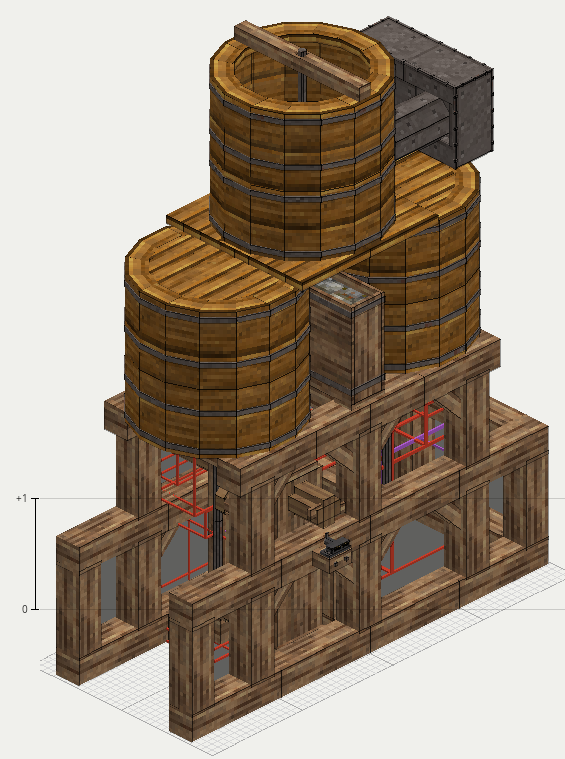
The figure shows the cells the machine will claim, layer by layer, with its collision boxes in red.
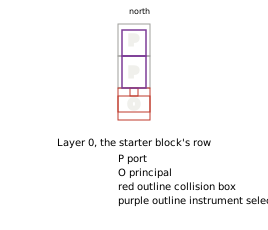
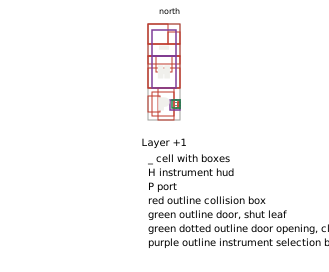
| Glyph | Meaning |
|---|---|
P | port |
O | principal |
_ | cell with boxes |
H | instrument hud |
Tested setup: raising the blower and a casting bed
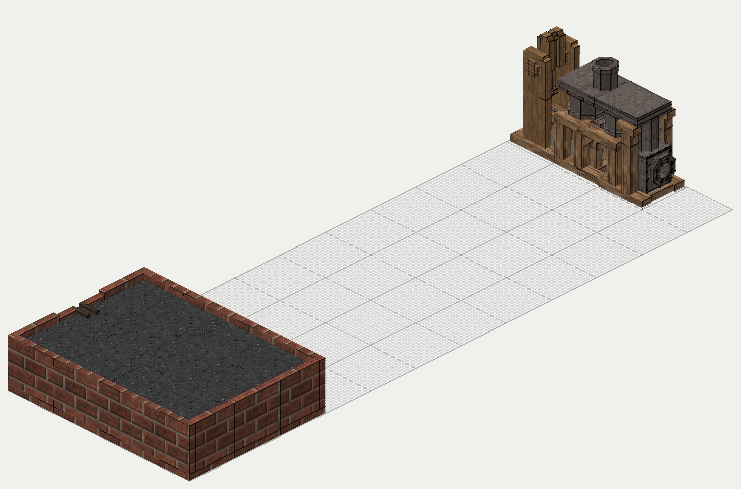
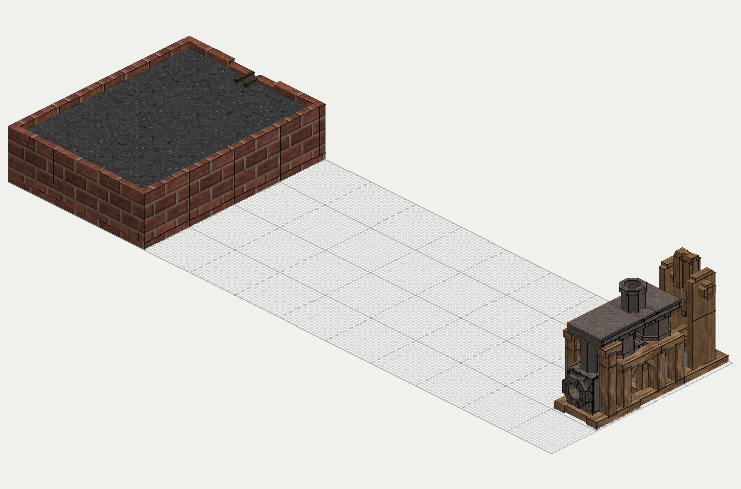
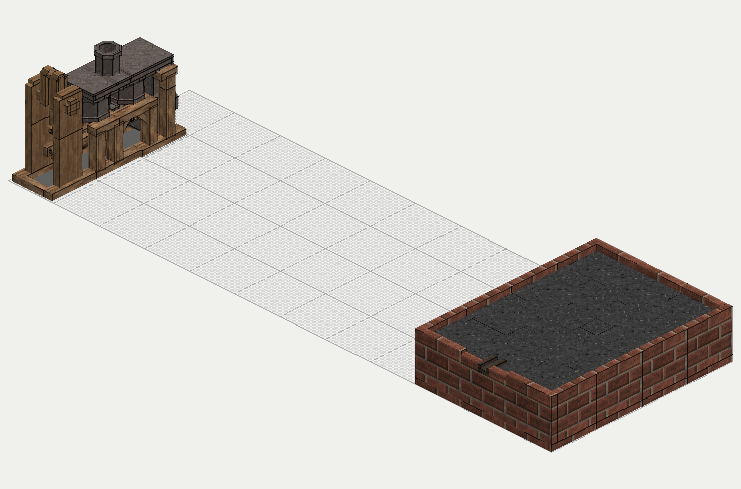
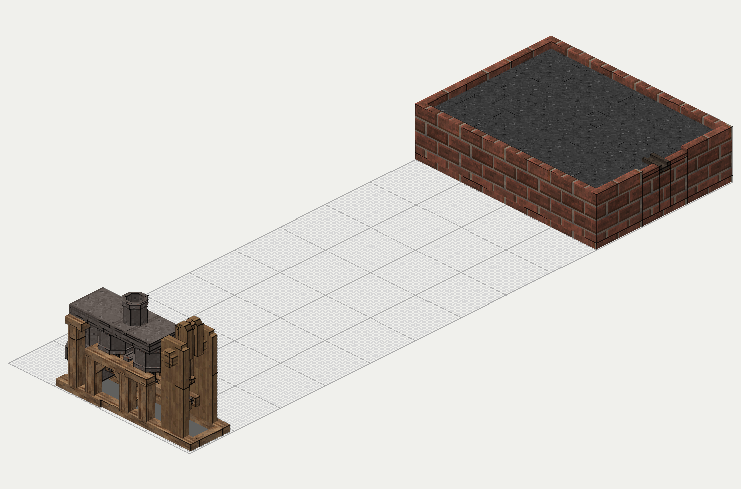
The mod's tests raise this blower and a Sand Casting Bed beside it stage by stage, the way a player would.
- The blower's frame is placed. With an iron hammer in hand, right-click adds the tubs, which take 4 leather, then the drive, then the receiver and its regulator, then the blast stage.
- Ten blocks away, a Sand Casting Bed is placed on its first course of sand, and sand finishes it a course at a time.
Every stage of both is reached and built by a click, and a stage a click does not reach fails the run. The blower reads complete at the end. Nothing runs: no axle turns the blower and no metal reaches the bed.
The iron hammer is gathered as in play. The frame and the bed are placed rather than crafted, the leather and the sand the stages take are not counted.