
Belly Helve Helve Casting
The belly helve's beam and head cast in one piece, journals and all. The seats, grooves and mortise are worked after the pour.
The belly helve, the cam-lifted iron hammer that shingles puddled balls into bar, is built from six castings and three smithed parts. The castings and parts can all be made now; the helve itself is not in the game yet, so they are stock waiting for it. Each casting holds only the iron its pour makes: the seats, grooves, mortise, eye, keyway, joint faces and bolt holes are worked after the pour.
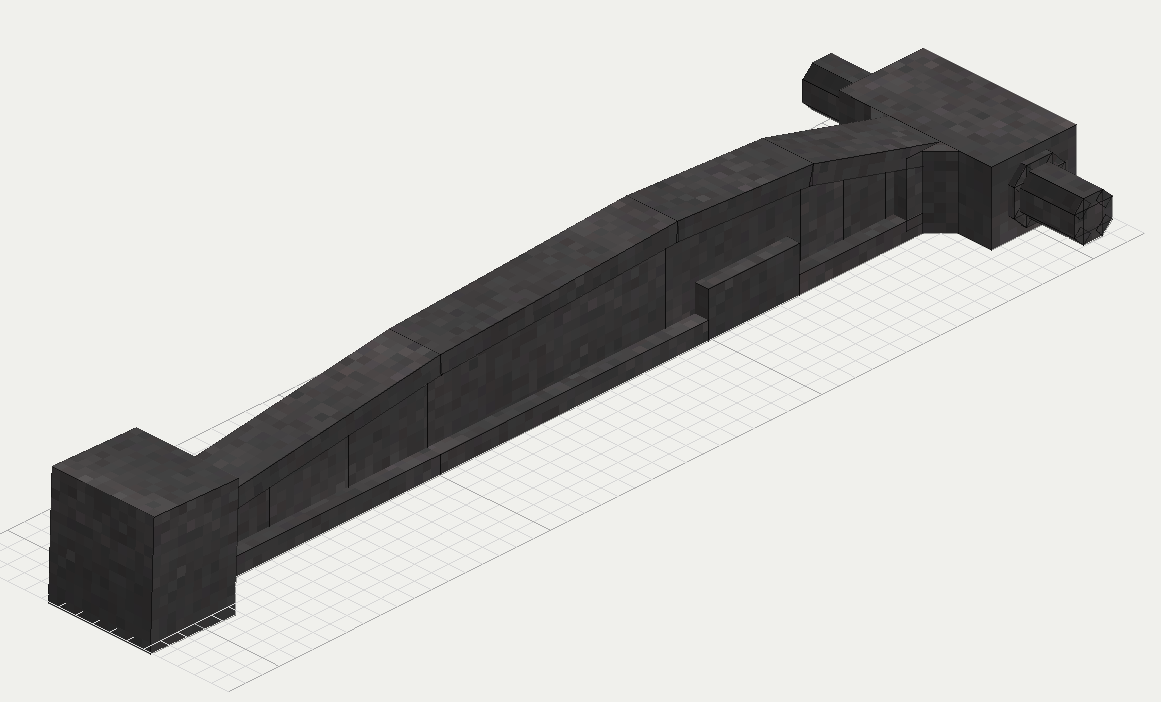
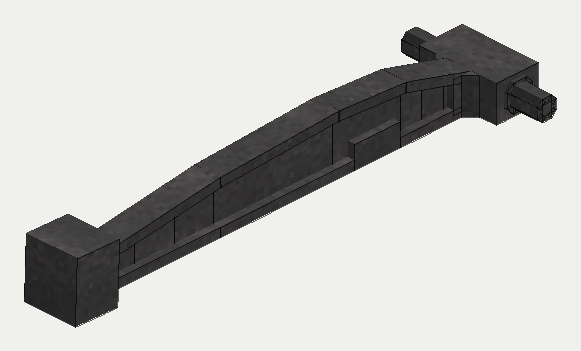
The castings
Every pattern for them is carved from the Belly Helve Diagram. Units are per piece.
| Casting | Units | Where it is poured |
|---|---|---|
| Belly Helve Helve Casting | 2300 | Long Flask under its cope, 1 to a pour |
| Belly Helve Standard Casting (with its bearing cap cast beside it; a hammer takes two) | 500 | Long Flask under its cope, 2 to a pour |
| Belly Helve Cam Ring Casting (three cams on its hub) | 580 | Long Flask under its cope, 1 to a pour |
| Belly Helve Stock Casting (the block the machine stands on) | 2770 | Floor Flask, 2 to a pour; Long Flask, 4 |
| Belly Helve Prop Stand Casting | 235 | Floor Flask, 8 to a pour; Long Flask, 20 |
| Belly Helve Anvil Casting | 3510 | Floor Flask, 1 to a pour; Long Flask, 3 |
The helve, the standards and the cam ring are closed patterns, moulded from both sides, so the long flask needs its cope hung first; see Long Flask.
The smithed parts
At the anvil, from iron ingots: the Helve Lifter from one ingot, the Helve Prop Post from two, and the Helve Face Set, the anvil pad's plate and tenon with the hammer face, tenon and wedge, from six.
Crafting chain
- At the Drawing Table 1 medium and 1 parchment are drafted into the Belly Helve Diagram.
- At the Vice Bench the diagram goes in the bench's diagram slot and two pattern boards in the crafting grid, in the cells that pick the part; the knife held on the bench carves that part's Pattern in 2 strokes.
- Pig iron and coke or charcoal go into the Cupola Furnace and come out as molten cast iron.
- The pattern is pressed into the green sand of the flask its table row names, and the molten iron poured at 1150 C or hotter gives the casting.